Tax-Themed Phishing Lures Push SimpleHelp Remote Access in Suspected MuddyWater Campaign
- Dr. Guy Waizel
- 990 views
Phishing emails posing as Israel's tax authority deliver SimpleHelp remote-access clients. Cato links the activity to suspected MuddyWater operators.
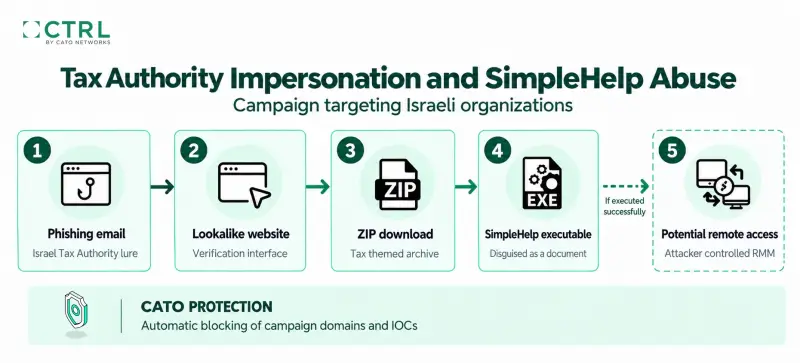
A phishing campaign aimed at Israeli organisations is wrapping a legitimate remote monitoring and management tool in a tax-authority lure. Cato CTRL researchers have tracked the activity since September 2026. They suspect MuddyWater, an Iran-linked group, is behind it, and the reason is less the lure itself than the tool. SimpleHelp is a product that many IT teams already run, and that makes this one harder to spot than a conventional malware drop.
The lure is a routine task
Finance, accounting and administrative staff are the obvious targets. Filing and document requests from a tax authority are routine, so a recipient who expects a tax document has little reason to pause. The phishing emails impersonate the Israel Tax Authority and send recipients to a lookalike site. Domains such as document-govil[.]com are built to resemble the Israeli public-sector namespace. Cato notes that the "govil" string sits inside a separately registered domain and says nothing about actual affiliation with Israeli authorities.
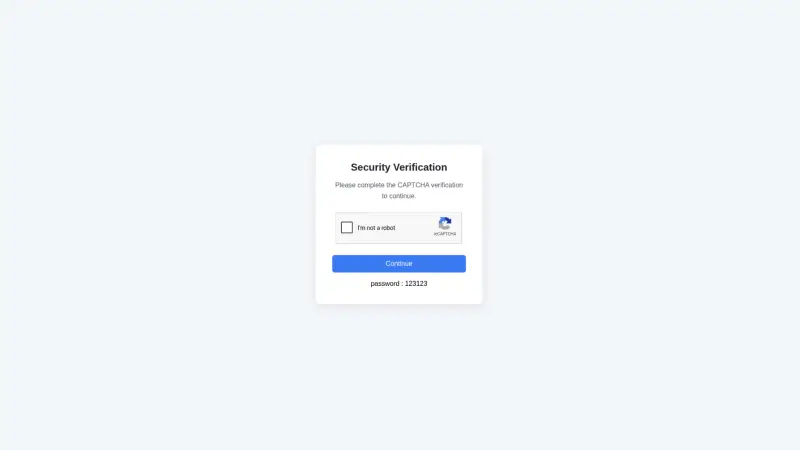
Visitors are asked to pass a CAPTCHA-style verification page. It shows a checkbox, a Continue button and the password 123123. The point is theatre. It makes the download look like a protected document hand-off, and it's the kind of step users are trained to click through.
From ZIP archive to remote-access client
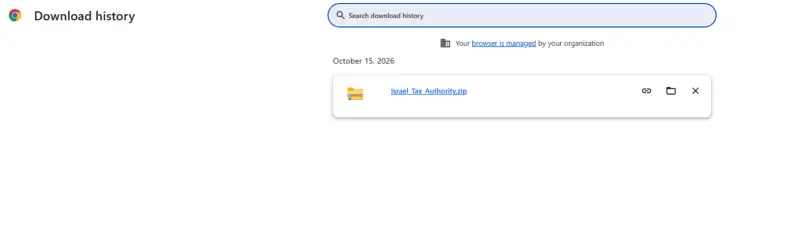
The download is a ZIP archive named Israel_Tax_Authority.zip. Cato's investigation also turned up an archive called document.zip. Inside, the main executable is named רשות המסים בישראל.exe, which translates to "Israel Tax Authority". A second payload, document.exe, is also in the inventory. The recipient expects a tax form and gets a program to run.
Those executables are SimpleHelp, not a bespoke backdoor. Both samples identify themselves as SimpleHelp Remote Access Client version 5.4.5. If one runs and connects, the operator gets the remote-access features the vendor documents. Cato's table maps those features to potential misuse: remote desktop viewing and control, terminal access, file transfer, system diagnostics, toolbox scripts, and the Unattended Remote Access Service. The last one matters most for persistence, because it lets an operator reconnect as long as the service stays active and reachable. Cato is clear that the table describes capabilities, not observed post-compromise actions.
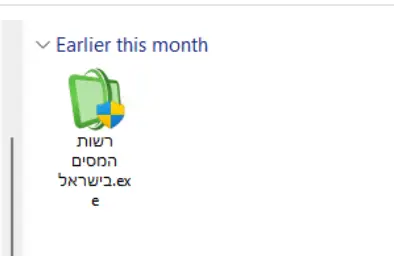
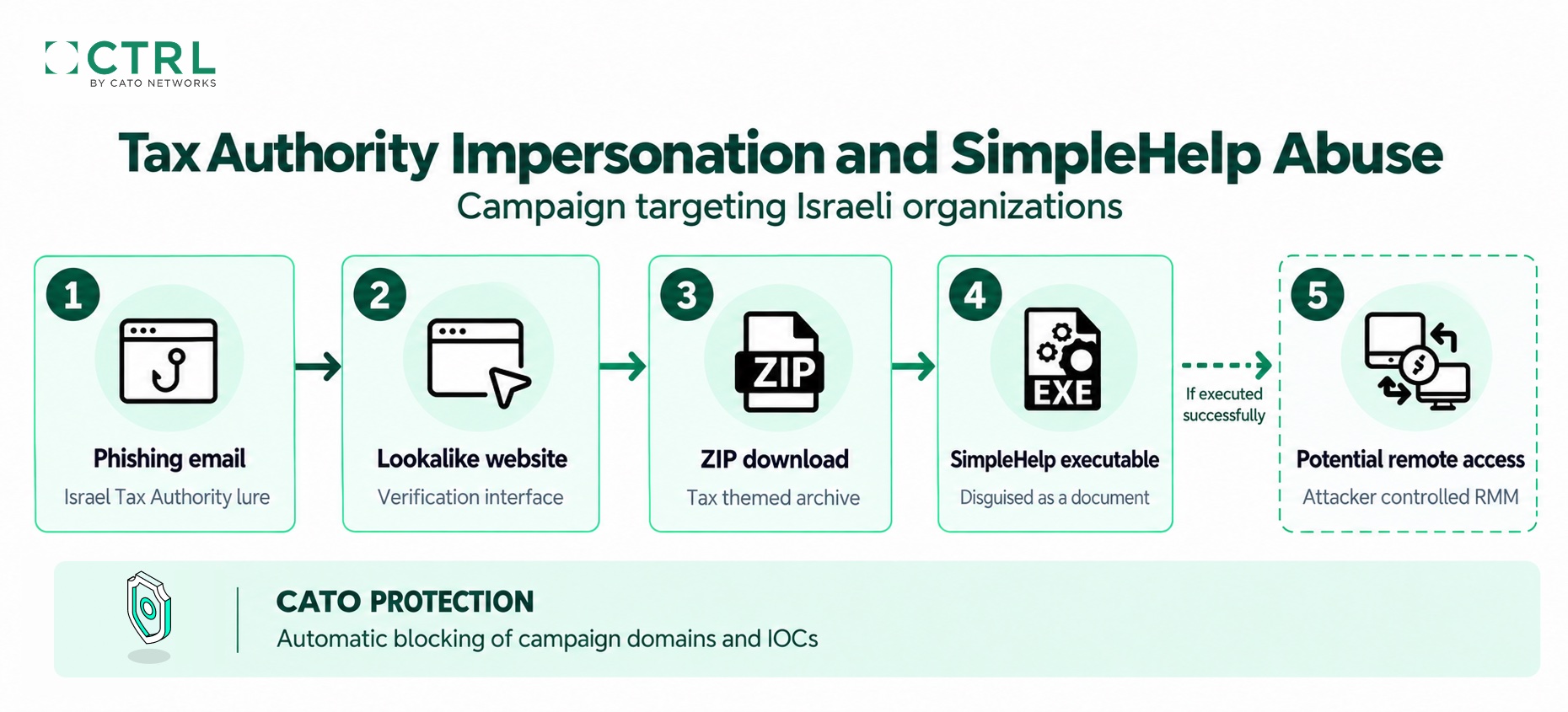
The delivery chain ends in a SimpleHelp executable. Remote access depends on that binary running and activating.
Infrastructure and what the search turned up
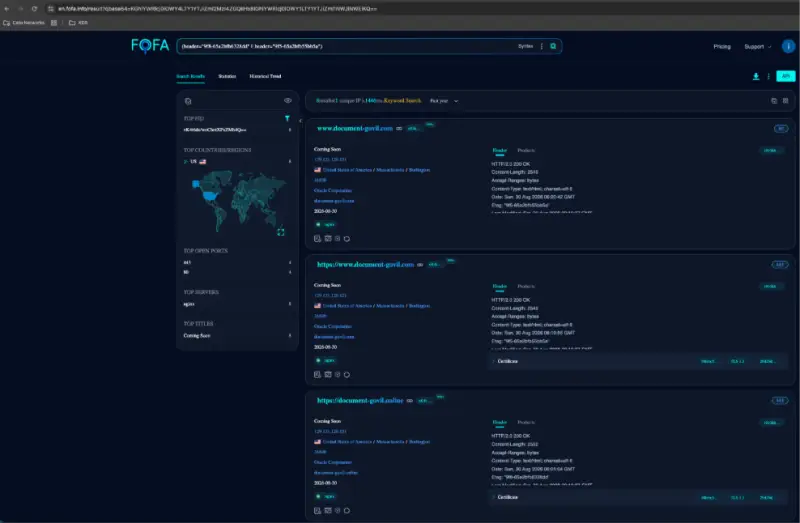
Cato associates the campaign with 129.121.120[.]121, which it describes as command-and-control infrastructure. A FOFA search on two HTTP ETag values returned eight service records on that single IP, including entries for document-govil[.]com and document-govil[.]online. Both domains showed "Coming Soon" pages served by nginx. My read is that the operators had the staging in place before the lures went out. Other infrastructure in the research inventory includes doc-taxes-govil[.]org, doc26-govil[.]org, and two SimpleHelp servers, 169.58.239[.]210 and 161.97.138[.]129, which were reported as abused.
Why Cato suspects MuddyWater
The attribution rests on a combination of factors rather than one marker. The targeting is Israeli, the impersonation is locally tailored, and the delivery method is legitimate remote-access software sent through phishing. Each of those has appeared in earlier MuddyWater reporting. HarfangLab documented an October 2023 MuddyWater phishing email that linked to a SimpleHelp installer. Proofpoint described Hebrew payroll lures in March 2024 that led Israeli recipients through PDF links to ZIP archives containing Atera installers. Earlier campaigns used institution-themed Egnyte subdomains and Hebrew filenames about scholarships and tourism. Group-IB has also documented MuddyWater's use of SimpleHelp.
That said, a shared tool doesn't prove a shared actor. Sophos, CISA and Huntress have all reported ransomware incidents involving SimpleHelp, so the software itself is being abused by several groups. The February 2022 joint advisory describes MuddyWater as a subordinate element of Iran's Ministry of Intelligence and Security, which gives context but not proof for this campaign. Cato is careful to call this a suspicion.
Disclosure and SimpleHelp's position
Cato reported the campaign and the SimpleHelp abuse to the vendor on 20 October 2026. SimpleHelp confirmed the version identification and reported no evidence of exploitation of a SimpleHelp vulnerability, and it found no compromise of its own infrastructure. The vendor's assessment was that this is malicious use of an older release. SimpleHelp asked for server addresses, timestamps and supporting evidence, and Cato shared the server list on 21 October 2026. For admins, the takeaway is that this is social engineering aimed at a legitimate tool, not a flaw to patch in SimpleHelp itself. Still, version 5.4.5 is the one to look for.
What to check in your environment
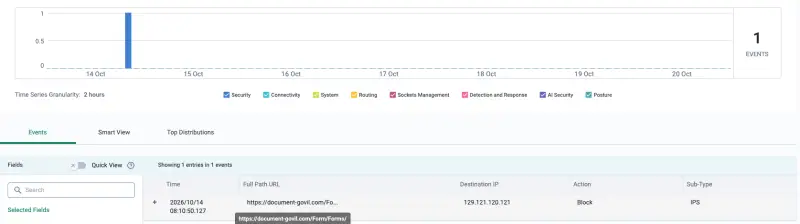
Start by asking whether any SimpleHelp client is installed on endpoints where your organisation hasn't sanctioned remote support software. A legitimate RMM deployment should be documented and inventoried, so an unexpected client is worth investigating. Next, review your mail and web controls for the domains above, and block the listed IPs where your tooling allows. Cato says its own platform blocks the campaign domains and IOCs automatically. Its IPS event shows a Block action on a request to document-govil[.]com/Form/Forms/ toward 129.121.120[.]121. Customers running their own controls will need to add these indicators by hand.
Known file hashes for the four samples are below, so you can search endpoints and mail gateways:
document.zip: 0d881ad82ddf4ccdb18c899572405dddc0adc2e6d351f8531881bf736760b0c2
document.exe: f018003432114393db3bd27a4f02e772a316078a80949f306c41fb397b219c6d
Israel_Tax_Authority.zip: 6ba34f275f27a2584c7d653f83a8bb9a8c48ef3ae19491cb796cc56b75106f88
רשות המסים בישראל.exe: 62a25285436c5e34a42661345ccbcd3fe7d96d74991a7fc37846cc9342ba39ff
Here's the thing: the lure is cheap and the tool is legitimate, so signature-based detection on the binary alone won't carry much weight. Watch for remote-access clients appearing where they shouldn't, and treat a tax-themed ZIP from an unfamiliar domain as a reason to stop. This campaign is unlikely to be the last one that uses a trusted RMM product as the payload.


