PHP2Shell Exploit Hunt on Underground Forums: Demand Runs Ahead of Proof
- Etay Maor
- 673 views
Cato CTRL saw forum users chasing PHP2Shell exploits on October 21, 2026, but doubts about whether the shared code actually worked stayed unresolved.
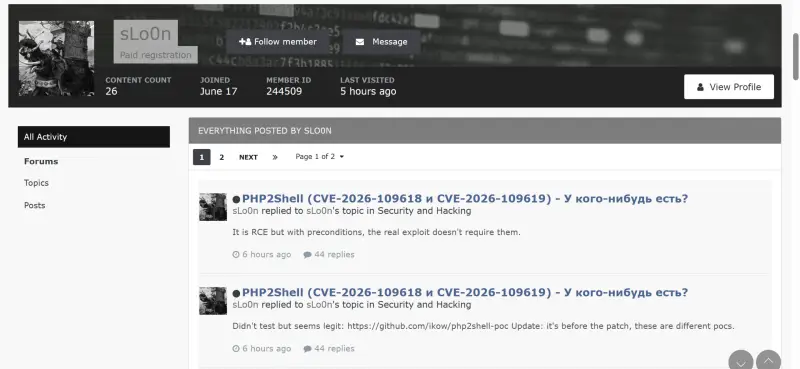
On October 21, 2026, researchers at Cato CTRL watched participants in underground forums hunt for PHP2Shell exploits. Others posted scripts that claimed to exploit CVE-2026-109618 and CVE-2026-109619. The conversation kept circling back to two questions: what the prerequisites were, and whether the code worked at all. For defenders, the gap between what people wanted, what they claimed, and what they could verify is the most useful part of the story.
The observations cover selected forum posts and chat messages collected through October 21. They show what was discussed and shared. They don't confirm a single compromise.
A request for code, and a debate about whether it runs
Exploit.in is a long-running forum, mostly in Russian, where members trade hacking techniques, tools and services. Threads there tend to surface early interest in new vulnerabilities, and that interest often shows up before anyone has tested a working proof of concept.
One thread named both PHP2Shell CVEs. Its opening line, translated from Russian, was "Does anyone have it?" That's a request for exploit material. The replies that followed were less about delivering code and more about whether the code was legitimate and what it required before it could do anything. One participant wrote "Didn't test but seems legit." Another described code execution "with preconditions" and pointed to a different "real exploit." These are opinions from forum members about material they hadn't necessarily run. They aren't technical conclusions from Cato's team.
Figure 1 captures that exchange: demand on one side, skepticism on the other. The thread never shows whether the person asking got anything that worked.
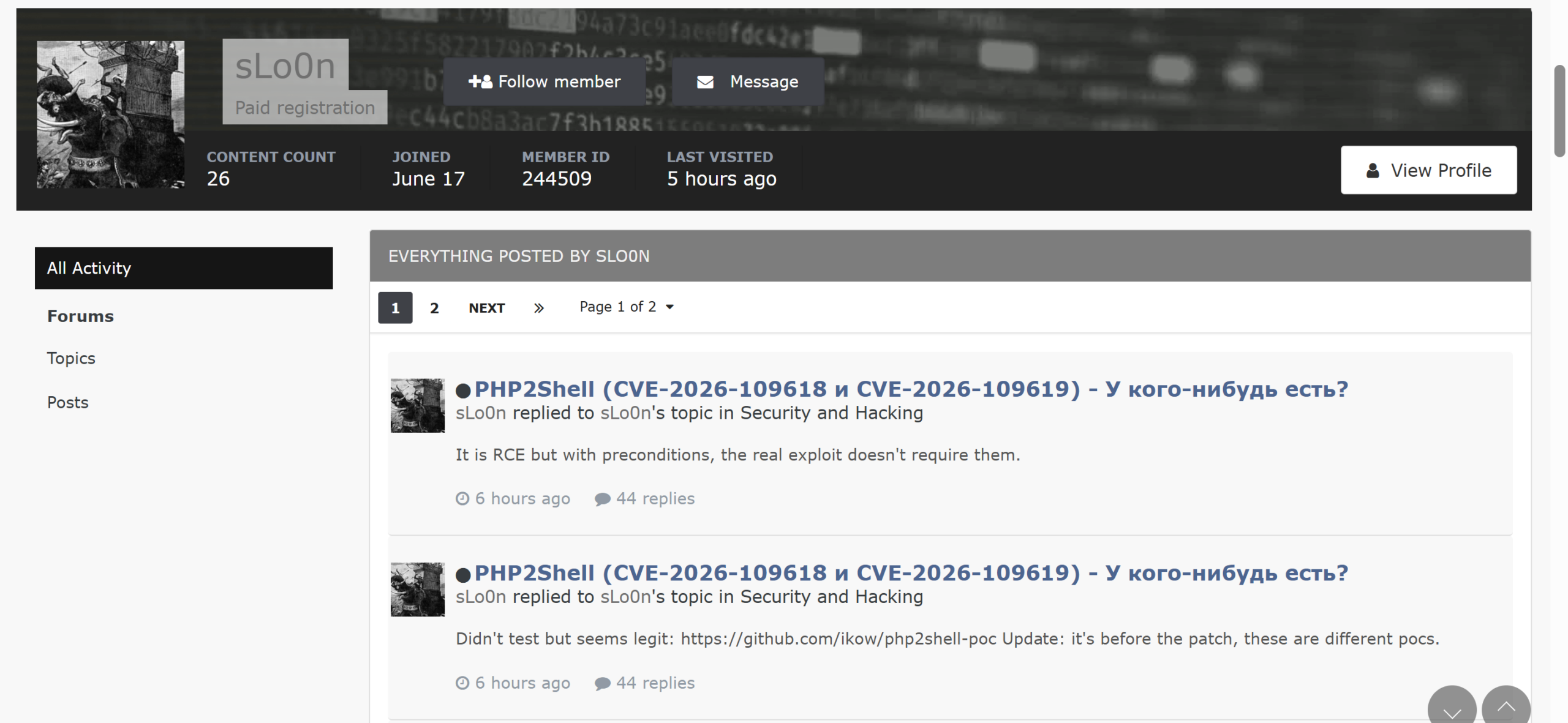
Figure 1. PHP2Shell exploit requests and discussion observed on October 21, 2026.
What was posted on October 21
The day's activity came in several strands. At 02.23 UTC, an English-language technical writeup appeared. Its author said they had reproduced the issue in a lab. Hebrew-language and Persian-language messages followed at 05.16 and 05.35 UTC. They passed along security alerts about the two vulnerabilities and about patches that were coming. The language a post is written in tells you very little about where its author sits, so Cato didn't read anything into those timestamps beyond the sequence itself.
At 06.22 UTC, a separate Exploit.in post presented scripts as exploits for both CVEs. That's the post that matters most for anyone judging how far the code had travelled, and it's the one that's hardest to evaluate from the outside.
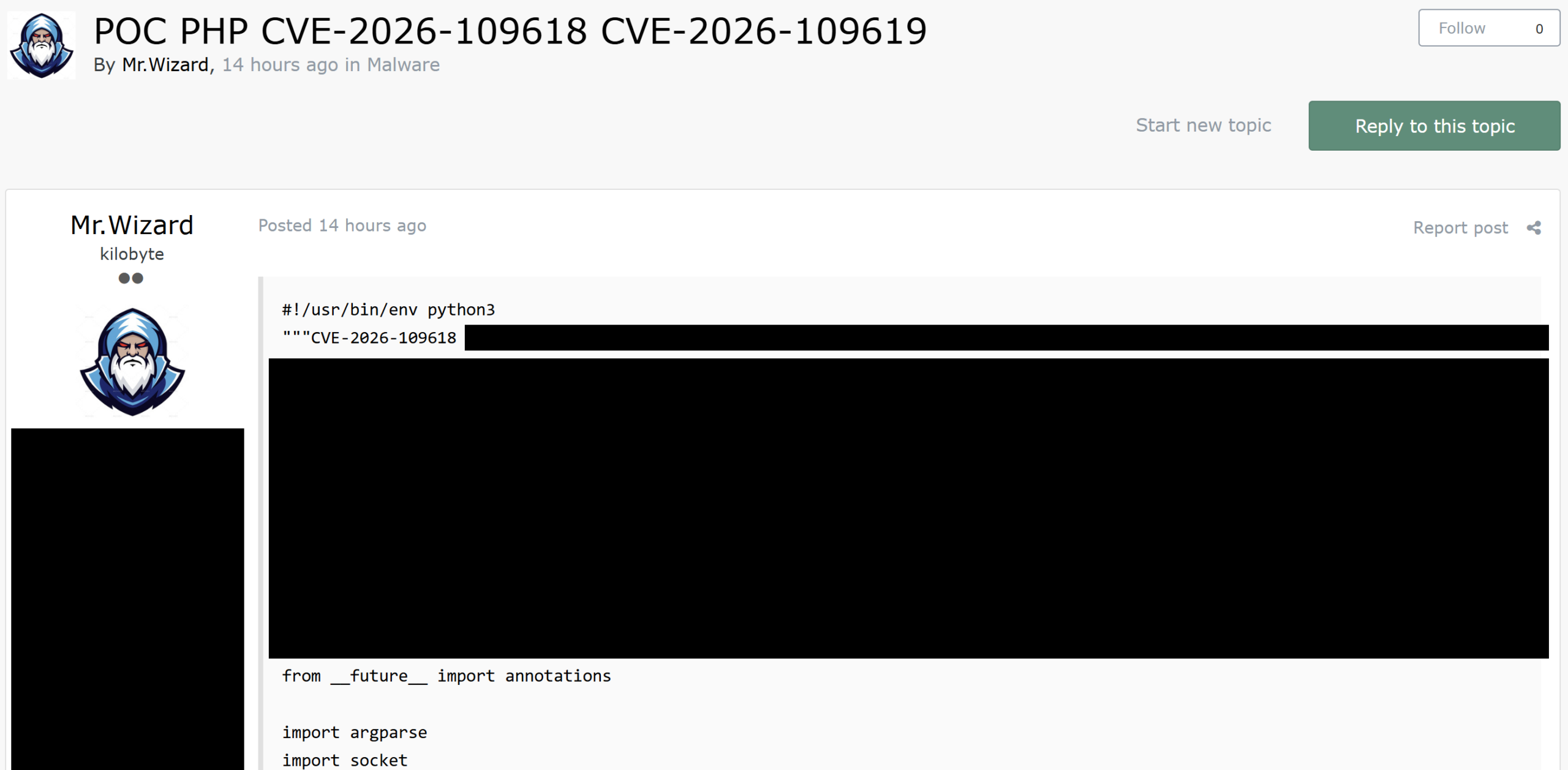
Figure 2. Forum post presenting purported PHP2Shell exploits, observed on October 21, 2026.
Cato redacted exploit instructions and memory offsets from the screenshots. The goal was to keep the forum context visible without publishing anything that would help someone reproduce the attack. Defenders who need the technical detail should work from the vendor patches and the public analysis described below, not from forum screenshots.
A separate screenshot in a monitored channel seemed to show command execution on a local test system. Cato hasn't verified that result, and the exact posting date wasn't available. Treat it as a claim.
Volume is also worth a look. By October 21, searches returned 68 forum posts for "PHP2Shell / CVE-2026-109618" and 62 for "CVE-2026-109618." Chat searches returned 81 messages for PHP2Shell and 57 for CVE-2026-109619. These numbers measure how much was discussed in the collected material. The searches overlap, so they shouldn't be added together.
Why a working PoC is harder to pin down than it looks
Public technical analysis published on October 23 on the SANS Internet Storm Center website looked at why some circulating PoCs depended on particular server settings and on knowledge of the target. That analysis covers the PoCs it reviewed. It doesn't cover every way PHP2Shell could be exploited.
The main point is that a PoC's success depends on the environment it runs in. The PHP version, the server setup, and what an attacker knows about the target can all decide whether a given script works. That helps explain the forum's back-and-forth. A script that runs cleanly on one lab box can fail quietly against a real estate with different configuration, and someone who copies it without knowing the prerequisites has no way to tell which situation they're in.
This is a pattern that shows up often with fresh vulnerabilities. Early code gets shared quickly, testing lags behind, and a claim of "works" usually means "worked for me, under these conditions." Teams that treat forum code as a rough signal, rather than a reliable one, tend to make better calls about how urgent a threat is.
Where the forum talk meets observed traffic
Cato's separate traffic analysis recorded exploitation attempts, scanning, and invalid-PoC attempts. The invalid-PoC attempts are the piece that connects most directly to the forum debate about whether circulating code worked. Cato describes those findings in its published PHP2Shell exploitation and IPS research. Cato says it found no evidence tying those requests to the forum participants or scripts covered here. Shared interest in an exploit and observed attack traffic are separate things, and the difference matters when you're deciding what to chase first.
On the protection side, Cato reports that its cloud-delivered IPS signatures blocked exploitation attempts on inspected customer traffic, without a separate protection package. Cato also states that PHP services outside its inspection coverage need their own remediation and protection. For most administrators, that's the operational takeaway: an upstream control doesn't reach every PHP host you run, so an inventory of where PHP is deployed is the first job.
Cato is still watching PHP2Shell activity and says it will keep updating its protections as techniques change. Meanwhile, the practical work is familiar. Find every PHP installation, confirm which versions are in play, apply the vendor updates, and treat forum code as a lead to verify rather than a tool to trust. Teams that spend this week on inventory and patching will be in a much better position than those waiting to see whether the scripts in the forum actually run.


