OPTIMJACK Shows How a Trusted Optimizely Script Became an Attack Path
- Dr. Guy Waizel
- 574 views
Malicious code in Optimizely Web Experimentation projects reached visitors through trusted sites. Here's what admins should check, and how Cato's controls fared.
The uncomfortable lesson from OPTIMJACK is that a script your website already trusts can become the attack. On 16 November 2026, malicious JavaScript injected into Optimizely Web Experimentation projects reached visitors through legitimate sites. The campaign, publicly referred to as OPTIMJACK, could divert cryptocurrency payments, skim card details and deliver exploits aimed at vulnerable iPhones and iPads. Public research associated affected snippets with 178 organizations. Optimizely says it has fixed the vulnerability and removed the injected code, but how much theft and device compromise actually occurred is still unclear.
How the flaw worked
According to Optimizely's initial incident report, a flaw in the signup flow allowed administrator impersonation. That gave attackers the ability to make unauthorized changes to Project JavaScript without stealing customer passwords. Only Web Experimentation was affected. Feature Experimentation, the SDKs and legacy Full Stack were not. Optimizely says it closed the flaw at 4.10 p.m. UTC and removed the injected code by 10.24 p.m. UTC on 16 November. Its forensic investigation was still running when the report was issued.
The altered code travelled through the normal snippet delivery process. From the browser's point of view, nothing looked unusual: the script still came from a legitimate Optimizely URL with a valid certificate. The malicious behaviour sat inside content the site had already authorized to run. Some implementations served snippets from customer-owned domains, which is a reminder to check the actual code and project change history rather than relying on a hostname. Analysis of the delivery mechanism describes how that trust carried the payload into visitors' browsers.
Which brands appeared in the research
The published inventory of affected web properties lists BBC, CNN, Zoom, Salesforce, GitLab, HSBC, Equifax, IKEA, ASOS, Air France–KLM, Alaska Airlines and Ledger. Those entries refer to particular snippets and properties. They don't prove that every page, product or internal system belonging to a named company was compromised. Treat the list as a prompt to check your own usage, not as a verdict on any brand.
What the payload could do
The documented payload capabilities are the part that should worry anyone running customer-facing forms. The code could redirect cryptocurrency payments, capture card details entered into accessible forms, and transmit readable cookies or page screenshots. The likely outcomes are financial loss, exposure of sensitive data and possible misuse of tokens. Hosted payment iframes and HttpOnly cookies closed off some collection paths, but they didn't make an affected page safe overall.
The mobile component is a separate problem. Published analysis reports that the exploit-kit code treated iOS 18.7.3 and later in the iOS 18 branch, and iOS 26.3 and later in the iOS 26 branch, as patched. Serving the exploit doesn't confirm that a device was compromised, though. Organizations may still face fraud investigations, recovery costs and damaged customer trust, and vendor cleanup can't reverse theft or data disclosure that has already happened. Exposure assessment should also cover employees who browsed affected external sites on corporate or personal devices used for work.
What Cato's telemetry showed
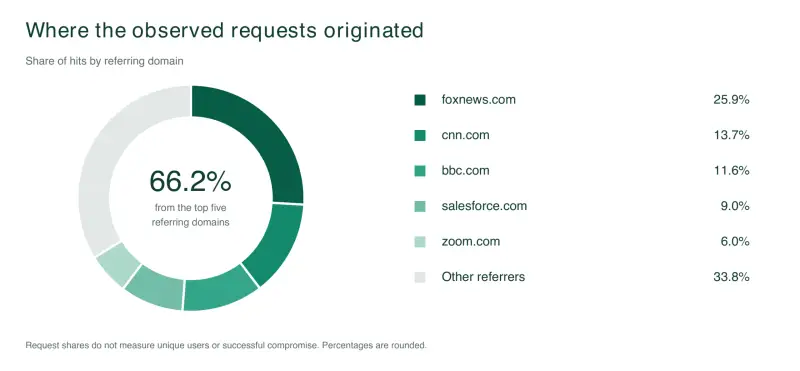
Cato CTRL's referrer analysis shows how visits to familiar sites led to requests against malicious infrastructure. In the distribution Cato charted, foxnews.com accounted for 25.9% of hits, cnn.com for 13.7%, bbc.com for 11.6%, salesforce.com for 9.03% and zoom.com for 6.01%. Those five referrers together make up roughly 66.2% of the charted hits. These are shares of requests, not unique users or confirmed infections.
Cato also reported that its IPS was enforcing Block actions on attacker-controlled domains through DGA-based blocking, and that campaign domains were later added to its threat intelligence feeds.
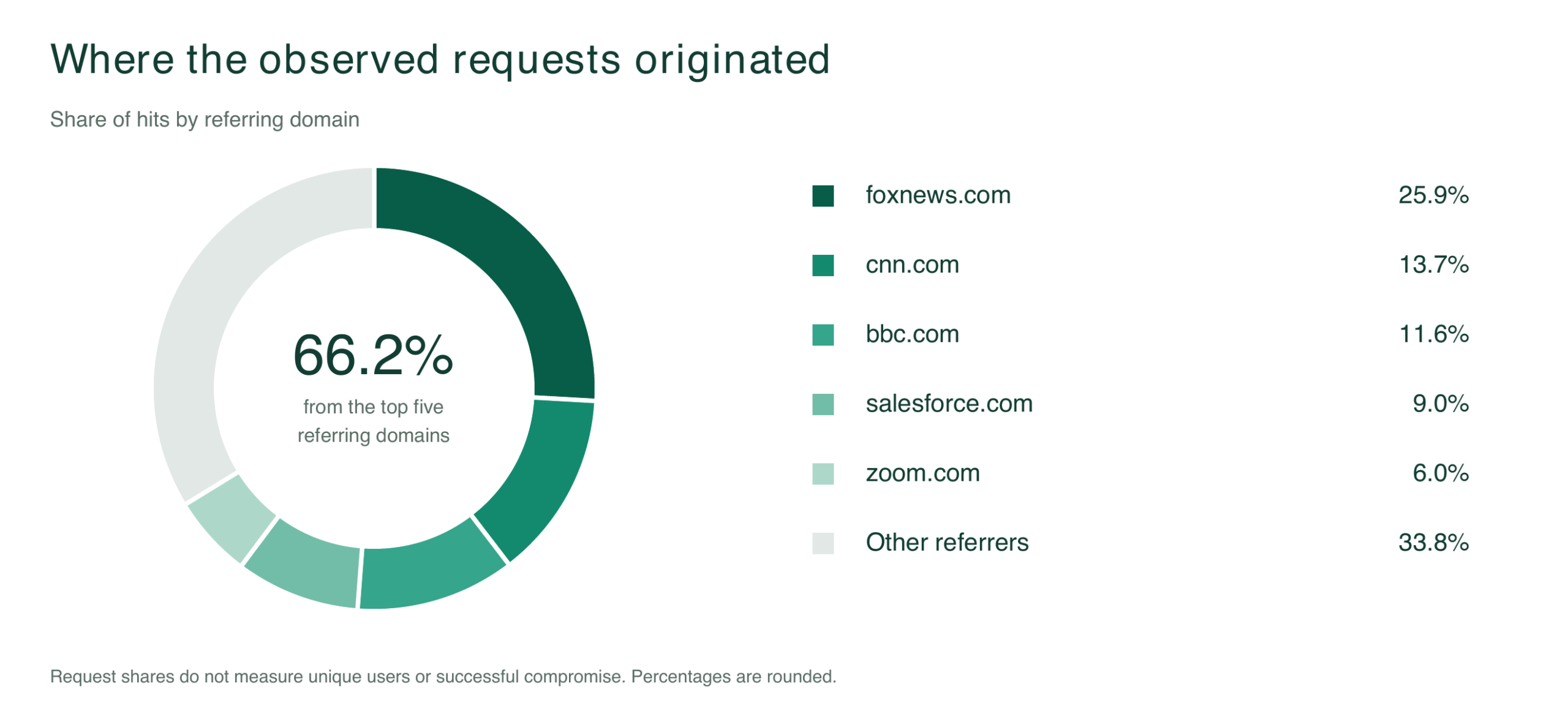
Figure 1. Distribution of referring domains in Cato CTRL's analysis. Other referrers are grouped using the remaining share of the original chart. Percentages are rounded.
Timing and the track.js hash churn
Cato's hourly flow data shows lower-volume connections to several campaign-related domains before the main Optimizely activity. Traffic to the principal payload host, 1688360[.]cc, rose sharply on 16 November and fell back toward baseline around the change to 17 November within the observed window. Earlier connections alone don't show that the attacker was preparing, and flow data doesn't prove that a payload was delivered.
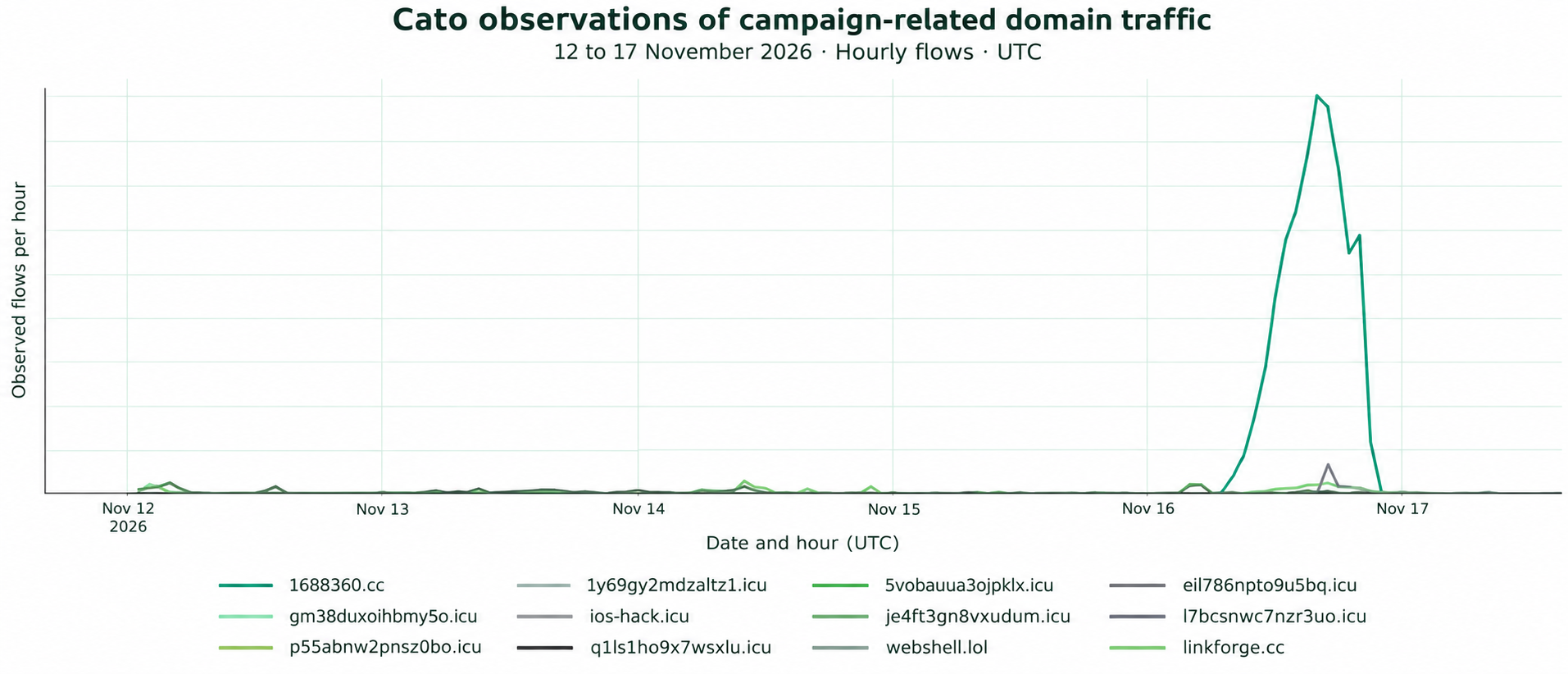
Figure 2. Hourly flows observed to campaign-related domains during 12 to 17 November 2026. The principal payload host shows a concentrated burst on 16 November. Connections alone do not establish compromise.
Public analysis also described repeated changes to track.js. Cato's observations recorded 49 distinct hashes on 16 November, with sightings between 08.19 and 21.20 UTC. Several hashes appeared only briefly, while the final numbered hash was still being seen later in the day. That pattern fits repeated changes to delivered content, and it shows why a single file hash is a weak detection anchor. The chart doesn't prove there were 49 functionally different versions, or that each change was designed to dodge detection.
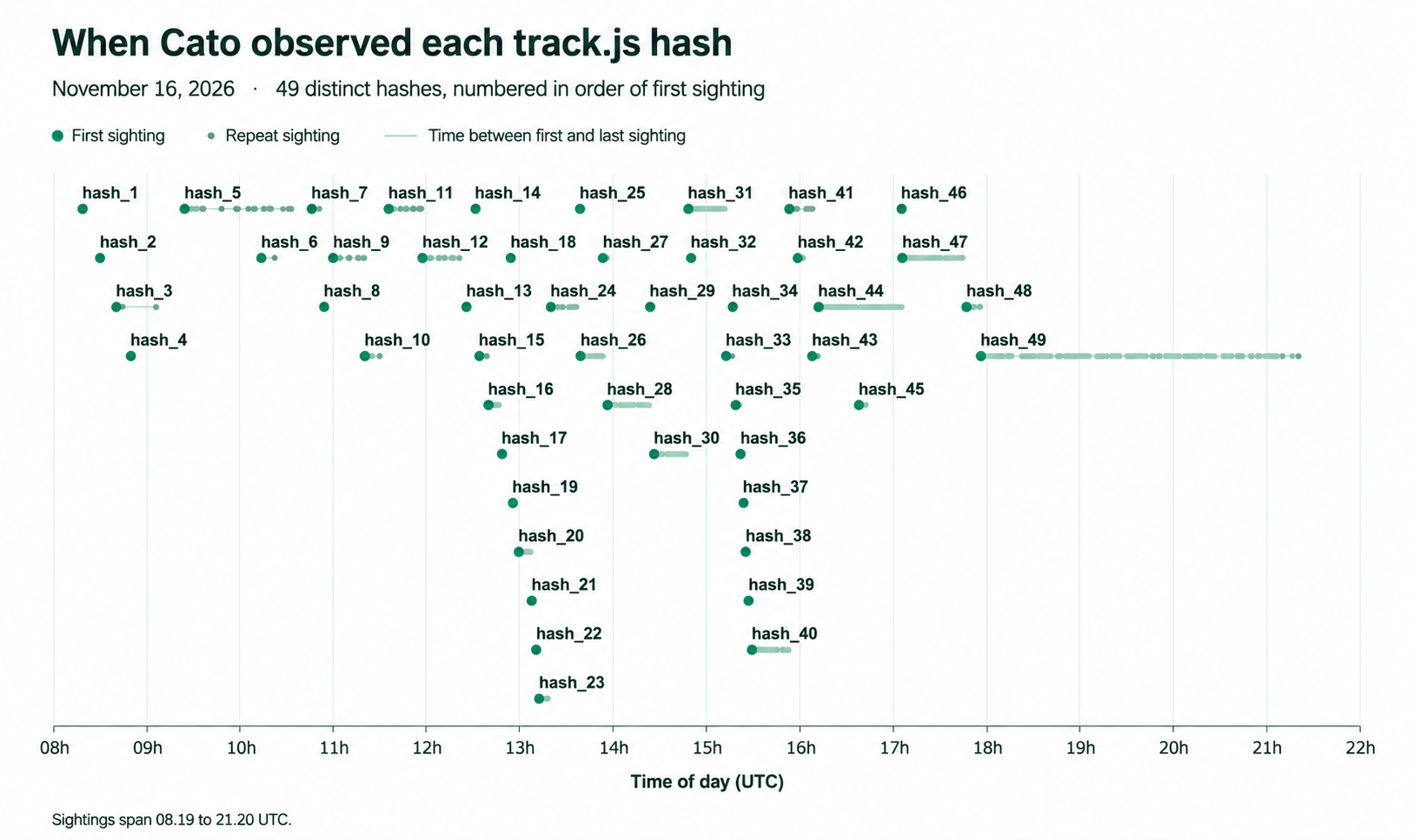
Figure 3. First and repeat sightings of 49 distinct track.js hashes in Cato observations. Lines connect the first and last observed sightings and do not imply continuous delivery.
Where the existing controls helped, and where they didn't
Cato says its protections blocked parts of the campaign before campaign-specific indicators were added. Connections to attacker-controlled domains were stopped by real-time ML-based DGA detection where Cato IPS was enforcing Block actions. Cato then added all applicable protections for the known indicators and activity, including campaign domains in threat intelligence feeds, and says it continues to monitor. Central deployment pushes those updates across inspected traffic.
Remote Browser Isolation runs web content remotely for sessions that match an isolation policy, which reduces endpoint exposure. The default firewall Prompt rule for Uncategorized destinations shows a warning page instead of the requested resource. Where that rule applied, it could interrupt background JavaScript loading. Rule order, exceptions and destination classification all affect coverage.
Anti-Malware is a less clean story. It inspects supported files using signatures and heuristics, and NG Anti-Malware adds machine-learning detection. In the case Cato analysed, the JavaScript file was skipped because it had no popularity score, so Cato doesn't credit Anti-Malware with blocking that sample. That's a useful caution: a control that exists on paper may not have seen this particular file.
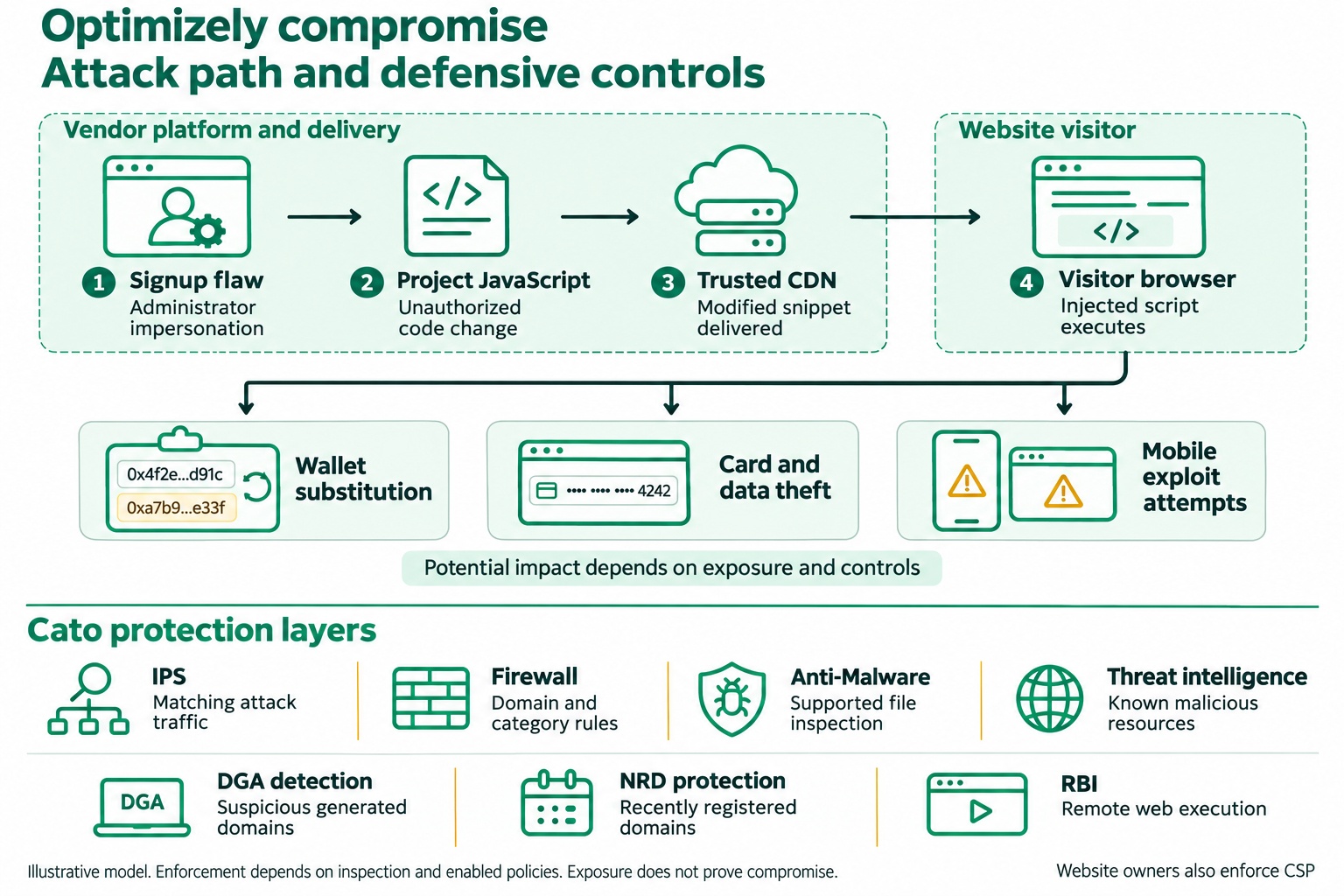
Figure 4. Attack stages, potential consequences and defensive controls. Enforcement depends on traffic visibility and the applicable policies.
What to check in your own environment
Start with correlation. Match incident-related destinations and referrers against user, host and visit-time logs. Network, browser and endpoint evidence can separate blocked requests from delivered payloads and from confirmed compromise. Cato IPS and firewall events can feed that assessment.
For payment exposure, the answer depends on whether the malicious code actually executed, which payload version was present, and what users did on the affected page during the 16 November window. Card details typed into accessible first-party forms may have been captured, while hosted cross-origin payment fields sat outside the skimmer's direct reach. Cryptocurrency transfers could have been redirected to substituted wallet addresses. A qualifying address swap could also trigger collection of the page URL, readable cookies and a screenshot, even if no transfer completed. Depending on what the evidence shows, session revocation, rotation of exposed credentials and coordination with fraud and payment teams may be warranted.
For iOS and iPadOS fleets, device-management records can show which devices ran affected versions. Because the exploit chains were reported as patched from the versions above, the useful question is whether devices were below those versions and had reached affected sites. Where exploitation is suspected, mobile forensic review and temporary limits on corporate access may be appropriate. Clearing browser data alone won't resolve a device-level compromise.
Controls worth reviewing
These controls can reduce exposure, depending on your policies and traffic coverage. Having them configured doesn't prove that this incident was stopped.
Newly registered domains: review NRD settings in IPS and DNS Protection, the domain-age threshold, DNS visibility and the relevant DGA detections.
Uncategorized destinations: check Prompt or Block rules, rule order and business exceptions. Prompt can interrupt background loading, but it isn't the same as an unconditional Block.
Remote Browser Isolation: consider it for selected browsing categories or custom destinations, and confirm that the relevant sessions actually match the policy.
Anti-Malware and NG Anti-Malware: confirm blocking actions, inspection exceptions, TLS inspection coverage and whether traffic reaches the enabled engines. IPS enforcement depends on the action set for each rule.
On the web side, cutting third-party scripts from sensitive pages and applying a restrictive Content Security Policy adds a layer that doesn't depend on any single vendor's delivery chain.
Why deployment consistency matters as much as the control
OPTIMJACK is a case where enforcement consistency matters as much as the protection itself. Central deployment cuts the time and effort needed to push updates to users and locations. But effectiveness still depends on traffic reaching the inspection path, enough visibility into encrypted connections and the right enforcement policies. Reviewing real coverage and event history will show what was inspected or blocked, and where to dig further, including activity that happened before protections were applied.
Indicators of compromise
The domains below come from public research associated with this campaign. Attribution remains uncertain for the final two entries. Use them to support investigation, not as proof of compromise on their own. Names are defanged.
| Indicator | Role | Investigation context |
| 1688360[.]cc | Payload host | Hosted track.js and endpoints used for card data, readable cookies and screenshot exfiltration. |
| 5vobauua3ojpklx[.]icu | iOS routing | Reported exploit routing infrastructure also observed before the Optimizely wave. |
| eil786npto9u5bq[.]icu | iOS routing | Reported additional iOS routing host used during the campaign. |
| l7bcsnwc7nzr3uo[.]icu | Exploit infrastructure | Associated with the iOS exploit delivery chain. |
| je4ft3gn8vxudum[.]icu | Related infrastructure | Reported in the same registration and hosting cluster as other iOS routing hosts. |
| webshell[.]lol | Earlier injector | Associated with earlier script injection and loading activity. |
| linkforge[.]cc | Related injector delivery | Reported SEO-panel script infrastructure carrying the injector. |
| q1ls1ho9x7wsxlu[.]icu | Attribution unverified | Registered after public disclosure of the name. Operator ownership is unconfirmed. |
| ios-hack[.]icu | Attribution unverified | Reported post-disclosure registration. Operator ownership is unconfirmed. |
The practical takeaway for this change window: find every Optimizely Web Experimentation project your organization runs, pull its change history for 16 November, and check which of your sites served those snippets. Then work out what your logs can and can't prove. The incident is closed on Optimizely's side, but the forensic picture, and the cleanup on your side, may take considerably longer.


