PHP-CGI Flaws CVE-2024-4577 and CVE-2012-1823: Fixed Versions and Hardening Steps
- [email protected] (Route XP)
- 997 views
PHP-CGI on Windows is exposed to CVE-2024-4577, and older CVE-2012-1823 still matters. Check your handler, compare versions, and upgrade or migrate.

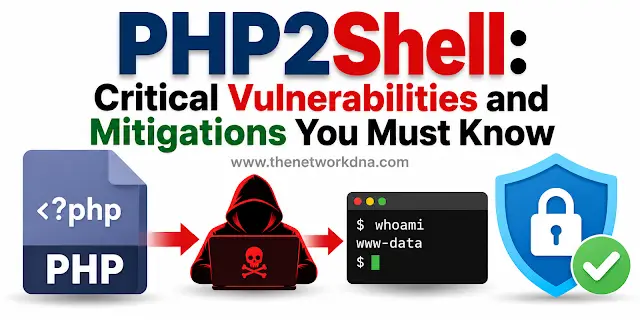
PHP runs content management systems, online stores, customer portals and plenty of internal tools. How secure a given PHP site is depends less on the language than on how it's deployed: which web server hands requests to PHP, which operating system it sits on, and how the runtime is configured. That's where the real exposure differences show up.
Why the "PHP2Shell" Label Shouldn't Drive Decisions
The name "PHP2Shell" has been circulating in headlines and social posts. Catchy names often appear before the technical details do, and they can get attached to the wrong product or the wrong flaw. My read is that patch decisions should rest on CVE identifiers, vendor and project advisories, and affected version ranges. The two issues that matter here are documented PHP-CGI vulnerabilities, CVE-2012-1823 and CVE-2024-4577, and you can check both against official records.
Find Out How PHP Actually Runs on Your Servers
The same application can behave differently depending on the handler. Four setups come up most often:
| Setup | How It Works | Security Notes |
|---|---|---|
| mod_php (Apache module) | PHP runs inside the Apache worker process, with no separate PHP executable handling each request. | Configuration is tied to Apache, and changes require a restart. Keep the module on a supported PHP release. |
| CGI (php-cgi binary) | The web server starts a PHP process for each request and passes request data through environment variables and standard input. | Request data reaches the interpreter, which is why argument handling flaws have mattered here. Rarely a good choice for new deployments. |
| FastCGI via php-cgi | The web server talks to a long-running PHP process over FastCGI. The process is still the php-cgi binary. | Found in some older Windows and IIS setups. Treat it as php-cgi for patching purposes. |
| PHP-FPM (FastCGI Process Manager) | A separate service that manages pools of PHP workers, commonly paired with nginx or Apache. | Pools can run under separate users with their own limits. The PHP project's advisory for CVE-2024-4577 describes php-cgi, so confirm scope before drawing conclusions about PHP-FPM. |
A quick check: run php -v on the server. A CGI binary reports (cgi-fcgi) and PHP-FPM reports (fpm-fcgi). The Server API line in phpinfo() shows the handler too. Delete any phpinfo page once you've checked it, because it exposes configuration details to anyone who can reach it.
CVE-2012-1823: Old, but the Lesson Holds
CVE-2012-1823 affected PHP in CGI mode. Certain query strings were interpreted as command-line options passed to php-cgi, which could expose PHP source code or allow code execution on the server. It was fixed in PHP 5.3.12 and 5.4.2, and it was widely reported as exploited after disclosure.
Most servers still running PHP branches from that period are far outside supported security coverage. The fix there is an upgrade, not a configuration tweak. The broader lesson is that web request data should never reach interpreter arguments.
CVE-2024-4577: Argument Injection in PHP-CGI on Windows
CVE-2024-4577 was publicly disclosed in June 2024. It's an argument injection flaw in PHP-CGI on Windows. According to the PHP project's description, Windows Best-Fit character mapping can convert certain Unicode characters into ASCII equivalents. Under some code page configurations, particularly those used for East Asian languages, that conversion can cause php-cgi to read request input as command-line options. The result can be source code exposure or remote code execution.
The exposure is narrower than many headlines imply. A system is relevant when all of these apply:
- The host runs Windows.
- PHP runs through the php-cgi binary, in CGI or FastCGI mode.
- The affected code page behavior applies to the server configuration.
- The PHP version falls within an affected range.
CISA has added CVE-2024-4577 to its Known Exploited Vulnerabilities catalog. Check the current catalog entry for its status before you rely on that detail in a risk assessment.
Fixed Versions for CVE-2024-4577
The PHP project's fixed releases for this issue are below. Check each branch's support status on php.net as well. A branch can carry the fix and still be out of security support, which leaves you in a worse position than it first looks.
| PHP Branch | Affected Before | First Fixed Release | Action |
|---|---|---|---|
| PHP 8.3 | 8.3.8 | 8.3.8 | Upgrade to 8.3.8 or later |
| PHP 8.2 | 8.2.20 | 8.2.20 | Upgrade to 8.2.20 or later |
| PHP 8.1 | 8.1.29 | 8.1.29 | Confirm support status; plan migration if out of support |
| PHP 8.0 and earlier | All releases in these branches | No fixed release for these branches | Migrate to a supported branch |
For servers on unsupported branches, no patch is available. Migration to a supported PHP release is the durable answer, and it may mean testing your application against newer language behavior first.
Hardening by Configuration
Legacy and Windows CGI setups. Where possible, move off CGI and FastCGI through php-cgi, either to PHP-FPM or to mod_php on Apache. If you have to keep php-cgi, run a fixed build from the table and follow the PHP project's current mitigation guidance for your configuration. Restrict which hosts and networks can reach the interface.
PHP-FPM pools. Give each site its own pool and system user, so a compromise in one application doesn't automatically reach the others. Prefer Unix sockets over TCP listeners where your web server supports them, and lock down socket permissions. Use open_basedir to limit which file paths a site can read. Test before you disable any functions, since some applications depend on them.
Every configuration.
- Set
expose_php = Offso the PHP version isn't advertised in response headers. - Set
display_errors = Offon production servers, and log errors to a protected file. - Keep
allow_url_include = Off, which is the default. - Remove phpinfo files, test pages and unused scripts from web-accessible directories.
Where a Web Application Firewall Fits
A web application firewall can be a sensible compensating control while you plan an upgrade. It can filter known malicious request patterns, but it doesn't fix the vulnerable code. Its effectiveness depends on the ruleset, how well it's tuned and the traffic it sees, and rules can be bypassed. Be skeptical of any vendor claim that a product blocks a specific percentage of attacks, and test rules in your own environment before you rely on them. A WAF should never delay a runtime upgrade.
A Practical Sequence for the Change Window
1. Inventory every PHP installation. Include staging systems, legacy Windows hosts and forgotten test environments. Record the operating system, web server, PHP version and handler.
2. Confirm the handler. Use php -v and the Server API line to see whether each site runs through php-cgi, PHP-FPM or mod_php.
3. Compare versions against the fixed-version table. Flag any Windows server running php-cgi on an affected branch, and flag every server on an unsupported branch regardless of handler.
4. Upgrade or migrate. Test on a staging copy, including plugins, extensions and custom code that depends on CGI behavior. Then apply the change to production in a planned window.
5. Review web server logs. Search for requests to PHP entry points with unusual query strings, especially those beginning with dash characters or containing encoded characters. Investigate unexpected process activity or new files on the server.
6. Restrict and monitor. Limit administrative access to PHP and web servers, forward logs to a central location, and follow the PHP project's security announcements.
Frequently Asked Questions
Is "PHP2Shell" a verified vulnerability? Not under that name. The documented PHP-CGI issues are identified by their CVE numbers, and that's the reference to use.
Does CVE-2024-4577 affect Linux servers? The exposure described by the PHP project depends on Windows code page behavior, so the issue is Windows-specific. Linux servers should still stay on supported, fixed releases as routine maintenance.
Is PHP-FPM affected by CVE-2024-4577? The PHP project's advisory describes the php-cgi binary. Confirm the scope with the project, and keep PHP-FPM on a fixed release regardless.
Do I need to change application code for this CVE? For CVE-2024-4577 the fix is a runtime upgrade. Application-level risks such as SQL injection and insecure file uploads are separate and still need their own review.
What to Take Into Next Week
PHP security comes down to three questions: how your server runs PHP, which version it's on, and whether that version still receives fixes. The PHP-CGI issues covered here are documented, but their exposure depends on specific conditions. Identify the handler, compare the version against the fixed releases, and upgrade or migrate. Treat any unsupported branch as the top priority, because for those servers there's no patch to wait for.
CVE details, fixed versions and support dates change over time. Confirm them against the PHP project's release announcements, the CVE record and CISA's catalog before changing production systems.


