AWS re:Invent 2026: Intel Xeon, Local Cloud Testing and WorkSpaces Sessions
- Tom Fenton
- 379 views
AWS re:Invent runs November 30 to December 4 in Las Vegas. These sessions cover Xeon workloads, local AWS testing and WorkSpaces administration.
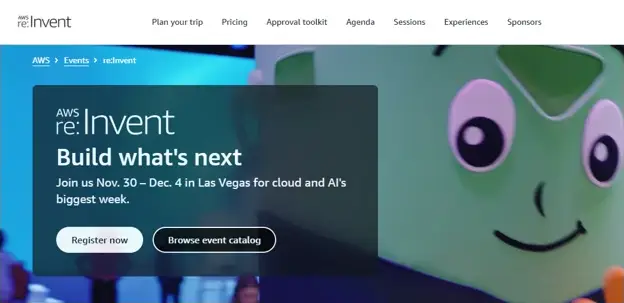
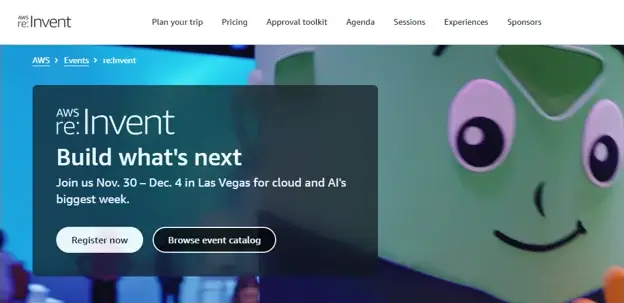
For infrastructure teams, AWS re:Invent 2026 has a practical agenda beneath its scale: how far CPU based inference can go, whether local cloud emulation fits current development workflows, and how WorkSpaces deployments are changing. The event runs in Las Vegas from November 30 through December 4. AWS lists more than 2,200 sessions across six properties, so choosing sessions and allowing time to reach them will matter.
Three threads stand out for IT teams: Intel Xeon performance on Amazon EC2, alternatives for testing AWS workloads locally, and WorkSpaces sessions on deployment, administration and AI agents. Each gets at operational questions, from hardware sizing to CI/CD costs and desktop management.
Xeon CPUs and inference workloads
Accelerators draw attention for AI, but general purpose CPUs may suit inference and data processing jobs that don't need a discrete GPU. Intel Xeon processors include Advanced Matrix Extensions (AMX) and AVX-512, instruction sets that support matrix multiplication, deep learning inference and high throughput data processing.
The question for operators is how these capabilities perform on EC2 instance families such as M7i, C7i and R7i. Running inference on those instances could help teams use existing compute capacity and avoid some GPU cost or availability constraints. The actual trade-offs depend on workload behavior and instance sizing; the sessions may offer useful detail from Intel engineers and practitioners.
This interest also connects to a broader operational pattern: teams using spare CPU capacity for background inference and local data processing, rather than reserving dedicated accelerators for every job. A prior discussion about vSphere Kubernetes Service workloads helped prompt the focus on container orchestration and managed services. For administrators, the useful takeaway to watch for is how CPU based workloads behave in production conditions, not just whether the processor supports particular instructions.
Local AWS emulation and changing options
LocalStack provides a way to develop and test against emulated AWS APIs inside Docker containers. Its supported services include S3, Lambda, DynamoDB, SQS and IAM. For teams building serverless pipelines or microservices, local testing can reduce reliance on live cloud environments during each development cycle, where repeated runs may add latency, cost and CI/CD complexity.
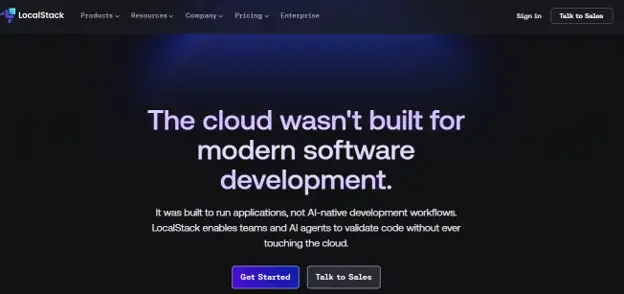
LocalStack plans 15 minute demonstrations on the Expo floor and a local cloud community event, localhost:2026, on December 2 at Cabo Wabo Cantina in Planet Hollywood. Conversations with teams running the tool in production could help clarify where emulation fits in testing pipelines and what limitations operators encounter.
Its distribution model changed on March 23, 2026. LocalStack for AWS moved to a single image that requires an account and an auth token, including in CI pipelines. The company says its free tier is intended for non-commercial use and that it can no longer commit to regular updates for the community edition. Those terms may affect teams that rely on community builds or run many lightweight test environments.
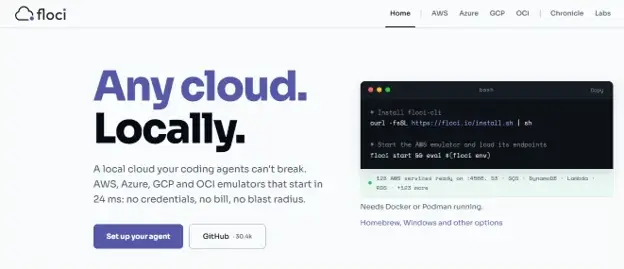
Floci is one alternative drawing interest. The project describes its MIT licensed, open source AWS emulator as a drop-in replacement that uses port 4566 and requires no account or auth token. That setup may appeal to teams seeking test runners across developer machines without managing license keys. How well it fits depends on the services and behaviors a team needs to emulate.
Two Intel sessions for the schedule

Optimizing SAP RISE for Cost and Scale with Intel (HMC203-S) addresses memory footprint, storage throughput and CPU sizing for SAP HANA workloads moving to a cloud managed model under SAP RISE. The session focuses on scaling those workloads on Intel based AWS instances while controlling infrastructure costs. It is scheduled for December 1, 12:00 to 1:00 p.m., at Caesars Forum, Level 1, Forum 120.
Agentic AI on AWS with Intel and Databricks (CMP204-S) covers systems that take multiple steps, such as querying databases, coordinating pipelines and retrieving context. The session examines agent frameworks built with Databricks data engines and Intel optimized AWS instances, including ways to keep vector operations and model calls efficient. It is scheduled for December 2, 4:00 to 5:00 p.m., at Wynn and Encore, Upper Convention Promenade, Cristal 2.
WorkSpaces deployment and administration
The WorkSpaces schedule includes a Capital One deployment session. AWS lists the deployment as growing from 320 to 20,000 desktops in 72 hours. A customer panel, MAM201, covers how IT leaders carried out cloud desktop migrations. For teams planning virtual desktop changes, these sessions could provide operational detail on scaling and migration choices.
Other sessions examine AI agents and administration. MAM332 is a workshop on agents that operate desktop and mainframe applications through WorkSpaces. MAM343 is a chalk talk on governing those agents; MAM348 covers provisioning desktops for developers; and MAM347 introduces an AI advisor for WorkSpaces administration.
Plan around the venue footprint
The event spans The Venetian, Caesars Forum, Caesars Palace, Wynn, Encore and MGM Grand, with the Expo at The Venetian. Sessions are distributed across the properties, making travel time part of the schedule. Build in room for walking routes and shuttle trips, especially when moving between venues for consecutive sessions.
AWS says reserved seats may be released to walk-up attendees when the holder hasn't arrived ten minutes before a session begins. Arriving early may improve the chance of getting into a full session, though access isn't guaranteed. After-hours meetups and receptions offer time to compare implementation notes with other attendees. For teams finalizing their calendars, HMC203-S and CMP204-S are the clearest matches for SAP sizing and CPU based AI discussions.