Castilla-La Mancha Puts WordPress.com's Student Plan in 40 Vocational Centres
- Alvaro Gómez
- 358 views
Castilla-La Mancha will promote WordPress.com's Student plan across 40 vocational centres, reaching about 45,000 students. It's the programme's first regional deal in Spain.

The most interesting part of this deal isn't the headcount. It's how it started. A single teacher at the Toledo School of Art made an introduction, and that introduction ended in the first formal agreement between WordPress.com Education and a regional administration in Spain. For IT teams that run hosting, identity or student accounts in education, it's a useful case study in how a grassroots adoption can turn into a system-wide decision.
Under the agreement, Castilla-La Mancha will promote the Student plan across 40 vocational education centres, making it available to approximately 45,000 students. The programme already has more than 10,000 active students across 531 institutions in 66 countries, so this is a large step up in scale for a single region.
How a classroom contact became a regional deal
Teachers in Castilla-La Mancha were already using WordPress.com with their students before any formal agreement existed. Six centres in the region had adopted the programme on their own initiative.
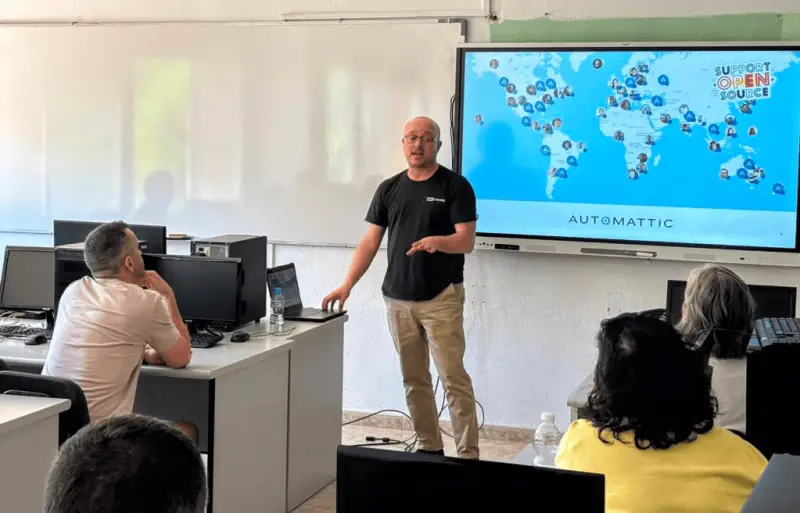
The turning point came through that Toledo teacher, who connected the WordPress.com team with Sebastián Romero López, the regional coordinator for vocational education in IT and communications. Sebastián was looking for a free hosting option his students could use, and he invited the team to present the programme at a regional event in Ciudad Real in June.
That pattern is worth noticing. Many education platforms reach a region through procurement or a top-down mandate. Here, the conversation started with individual educators who had a practical problem, and it moved up to a coordinator who could see the wider system. Teams in similar positions often find that bottom-up adoption gives them the evidence they need to make a case to leadership later.

Why a hosted site matters for vocational students
The technical appeal is simple. WordPress.com lets students build and publish a site on the web without their school paying for hosting. That removes a budget conversation that often stalls small projects before they start.
Students can use the platform for coursework, publish finished projects, test ideas in public and begin a portfolio they can keep after graduation. Because WordPress is open source, the skills carry over. Someone who learns to build and manage a site in a school account can apply the same knowledge to a later job, a freelance business or a personal project, and the content isn't locked to a single school's systems.
For vocational students, the payoff can come quickly. Web development, design, marketing, media and commerce all depend on people who can create and maintain a web presence. Even students heading into fields that aren't obviously digital will likely need to show their work online at some point.
What changes for the region's schools
Until now, each school or individual teacher in Castilla-La Mancha had to find the programme and work out where it fit into their lessons. Adoption depended on initiative, which meant it was uneven and hard to measure.
With the agreement, the regional administration can promote the Student plan across all 40 centres at once, rather than leaving each one to discover it. Teachers still decide how WordPress fits into their classrooms. The difference is that far more of them will know the option exists before they go looking for it.
For IT and service desk staff in the region, the practical questions will be about account provisioning, student data handling and how the plan is rolled out in each centre. The announcement doesn't cover those details, so anyone planning a deployment should expect to work them out directly with the programme team.
Having a place on the web that's your own matters. This partnership gives students in Castilla-La Mancha the tools to turn their ideas into websites they can build, shape, and share. There's a lot to learn from making something of your own, and this collaboration is another step toward bringing that kind of hands-on learning to more students around the world.
Rich Tabor, VP, Growth & Data at Automattic
Tabor's comments frame the deal as a template rather than a one-off. The stated aim is to help more educators bring students to the open web using the same tools that professionals and businesses rely on, and to narrow the gap between classroom work and employment by building in-demand digital skills, showing them through real projects and starting a professional identity early.
He also described the Castilla-La Mancha arrangement as a model the company hopes to extend to other regions. Whether that happens will depend on how many regional coordinators find the same kind of champion inside their own systems.
What to watch next
An agreement like this is a starting point. The measure of its value will be what students produce: a site they can share, a portfolio they bring to an interview, or a project they keep working on once the course finishes. Those outcomes will take a few academic years to show up in any meaningful way.
If you manage IT for a school, college or training provider, the useful takeaway is that a free, hosted option with an education tier can move quickly when one informed teacher or coordinator makes the case. It's worth checking whether your own educators are already using the platform, because the regional deal may reveal demand you didn't know you had.
Educators, apply now to bring the Student plan to your class.