Three Years of Pulling Students Toward Data Center Careers
- Natalie Stipan
- 922 views
The Nomad Futurist Foundation and iMPR have signed a three-year deal to raise awareness of digital infrastructure careers among students. Here's what it means for hiring teams.
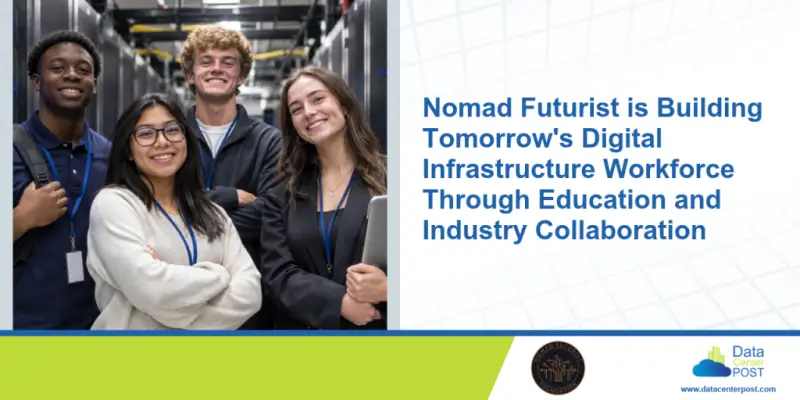
Here's the thing about the digital infrastructure talent gap: you can't hire your way out of it in a single quarter. The people who will run the next generation of data centers, networks and AI facilities are mostly still in school, and many of them have no idea these jobs exist. A new three-year agreement between the Nomad Futurist Foundation and iMiller Public Relations (iMPR) is aimed squarely at that gap.
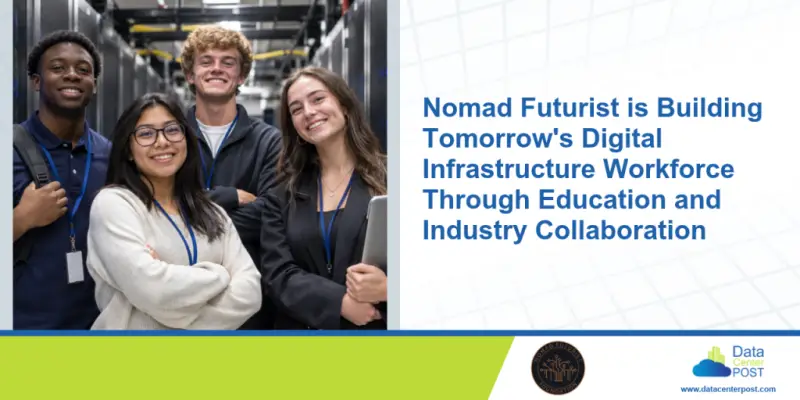
What the new agreement covers
The organizations announced the deal on November 2, 2026. It extends a collaboration that was already in place and centers on workforce awareness and educational outreach. The timing also marks a milestone for iMPR, which is celebrating 15 years serving the digital infrastructure industry.
iMPR's part is communications work rather than technical training. The firm will provide strategic communications, thought leadership, media relations, event promotion and industry storytelling. It also plans to use Data Center POST and NEDAS Live! to carry the Foundation's programs to a broader audience. My read is that the real value sits in that last part. A student-facing message needs a steady channel into the trade press and event circuit that working engineers already follow, and that's harder to build from scratch than it sounds.
Why the talent gap is pushing operators upstream
The announcement points to Deloitte's 2026 research, which found that 63% of surveyed data center executives named skilled labor shortages as their leading talent challenge. Over the same period, job postings for core technical roles rose 64% between 2023 and 2025. Put those two figures together and the logic is clear. When postings climb that fast, the hiring pool is already thin, and waiting for graduates to stumble onto the field is far too slow.
Teams in this position usually feel the squeeze in familiar ways: longer time-to-fill for facilities and network roles, more reliance on contractors, and fierce competition for people who already hold relevant certifications. Those are general patterns rather than findings from this announcement, but they explain why an awareness program is worth an IT or operations manager's attention. Pipeline problems rarely fix themselves at the point of hire.
What the Foundation is building
The Nomad Futurist Foundation focuses on making digital infrastructure easier for students to understand before they commit to a path. Its named initiatives include the Nomad Futurist Academy, scholarships, university partnerships and global ambassador programs. Each one puts different technologies and professionals in front of people who haven't yet picked a discipline, which is where awareness tends to matter most.
The Foundation organizes its work under three strategic pillars: Brand & Engagement, Programs & Impact, and Partnerships & Growth. Under the renewed agreement, iMPR's communications work is meant to make those programs more visible and to encourage more industry professionals to take part. That second goal is the one I'd watch. A pipeline depends on working engineers showing up to talk, mentor and host, not just on good messaging.
Ilissa Miller and the classroom side of the work
Ilissa Miller, iMPR's founder and CEO, also serves as an advisor to the Foundation. Her wider involvement includes the OIX Association's Digital Infrastructure Framework Committee and iMPR's Groundswell community engagement program.
Direct contact with students is where this gets concrete. At the CxC Hackathon 2025, Miller spoke to more than 350 students about the industry's talent gap and the career options open to them. That kind of session can show students how many different roles sit behind a data center or a telecom network, from design and power to connectivity and emerging technologies. Plenty of students have never heard that facilities and networking work can be a career in its own right.
What IT and operations teams can take from this
The announcement doesn't ask anyone to change a setting or deploy anything. The practical question is who in your organization already has ties to schools, colleges or training programs, and whether those relationships are being used. A few things worth checking:
First, look at whether your infrastructure roles are described in terms a student would recognize. Job titles that only make sense to people already in the field tend to filter out the people you're trying to reach. Second, consider whether a senior engineer could give a short talk at a local college or join a mentoring program. Third, if your organization hires interns or co-op students, find out whether the Foundation's programs could act as a referral source for candidates.
None of this is hard to start, but it takes sustained effort. Awareness programs pay off over years, not months, which is why a three-year term is the right length for this kind of work. The announcement doesn't publish targets or outcome measures, so the best signal to watch will be whether iMPR's channels start carrying more student-facing material and whether working professionals step forward to speak at these events. If they do, the pipeline problem gets a little easier to solve from the bottom up.