One Data Centre Design Across Europe? Why Local Rules Still Decide the Build
- Natalie Stipan
- 956 views
Hyceon argues that a single European data centre design can work if it is set to the strictest local rules, with local teams handling permits in each market.
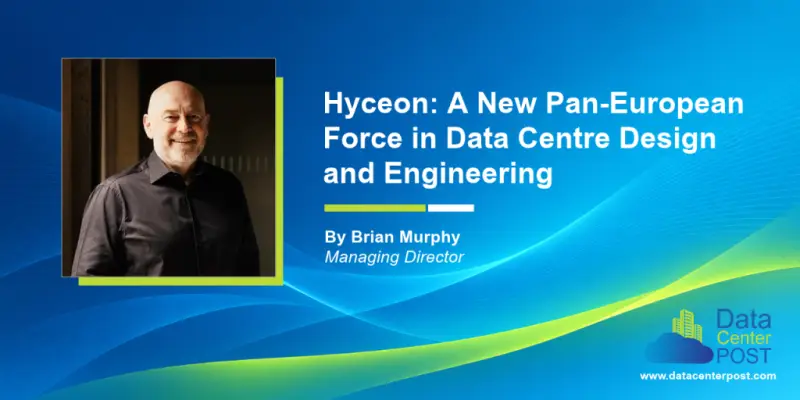
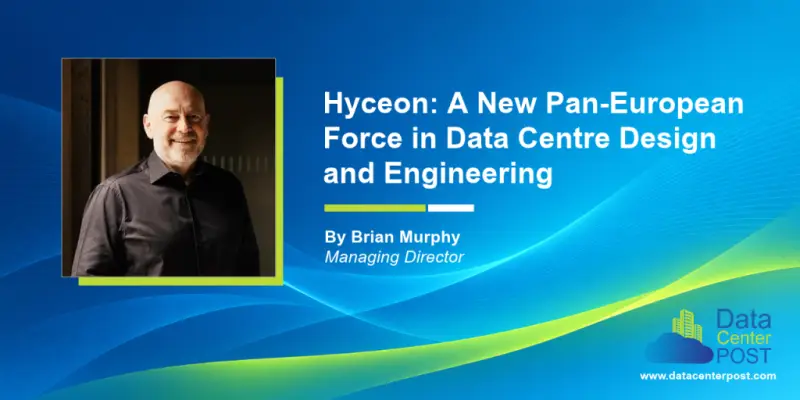
Anyone who has pushed a data centre through planning in two European countries knows the design drawings are the easy part. The hard part is that planning, permitting, grid, water and heat rules each shape how a project gets approved and built, and those rules don't line up from one border to the next. Hyceon's managing director, Brian Murphy, makes the case that a standard baseline design can still work across markets, provided it is built to the most demanding local requirements from the start.
Where the local rules bite
Murphy's list of friction points will look familiar to anyone running multi-country builds. Backup generators are the clearest example. In Germany, emissions-control permitting under the Federal Immission Control Act (BImSchG) can require generator flue stacks to reach calculated minimum heights. That pushes up building height, changes the massing and can reshape the planning application. Other markets may not impose anything comparable.
Planning goes further. Local plans set building heights, setbacks, façade treatments and landscaping, and some local authorities examine how a building looks as part of their decision. A design that clears one industrial zone may need a different envelope a few hundred kilometres away. Grid connection is arguably the biggest swing factor. Connection requirements, capacity constraints and delivery timelines differ widely, and Murphy points to Ireland's connection requirements and grid access milestones in Spain and Portugal as examples that shape site selection as much as the building itself.
Water and heat round out the list. Water availability, discharge rules and the chance to connect to district heating networks vary by region, and so do the expectations of the authorities reviewing them.
Murphy's core point is that these differences rarely change the underlying design. They do change how a project gets approved and delivered. The practical question is which elements can stay standard and which must flex to local conditions, and that question needs answering at the site assessment stage, not after the drawings are locked.
Germany and Ireland set the bar
Hyceon says its approach is built on experience in Dublin, where it dates back to 1988, and Frankfurt, where it dates back to 1990. The two markets are the reference points for its baseline.
In Germany, the Energy Efficiency Act (EnEfG) sets the bar for new facilities. Data centres beginning operation on or after 1 July 2026 must reach a power usage effectiveness (PUE) of 1.2 or lower. They also have to reuse a minimum share of their energy. According to Bird & Bird, the law sets waste heat reuse at 10% from 1 July 2026, 15% from 1 July 2027 and 20% from 1 July 2028 for facilities going into operation. Renewable electricity requirements, assessed on a balance-sheet basis, are tightening as well, with 50% from 1 January 2024 and 100% from 1 January 2027, according to the Stein law firm.
Ireland is a different problem. There, grid capacity decides whether a project proceeds at all. Under the CRU's December 2025 decision on new electricity connection policy for data centres, new facilities at 10 MVA or above must bring their own dispatchable generation and/or storage, on site or nearby. The de-rated capacity has to match the site's maximum import capacity, according to Mason Hayes & Curran. The CRU also expects 80% of annual demand to come from additional renewable generation in Ireland within six years of energisation.
Murphy says the same experience feeds Hyceon's work in the UK, France, Italy, Spain, Portugal, Poland, Austria and the Nordic countries.
Why build to the toughest rules
Hyceon's baseline draws on Germany's energy efficiency and energy reuse obligations, Ireland's grid connection and security of supply requirements, and the common reporting framework set by the EU Energy Efficiency Directive.
In markets where the rules are lighter today, that approach can look like overbuilding. Murphy's counter is that the cost of retrofitting a finished building usually exceeds the cost of allowing for it at design stage. Here's the thing: that argument holds only if the rules keep tightening in the direction Germany and Ireland have set, and nobody can promise that. What it does give you is a design that doesn't need reopening every time a requirement moves.
Murphy identifies three benefits. The first is resilience to regulatory change, since a design built around demanding standards is less likely to need major rework as national requirements evolve. The second is long-term asset value, which helps keep assets attractive to investors and tenants as expectations shift. The third is consistency across portfolios, so operators work from one design standard rather than a set of country-specific variants.
Heat reuse shows the trade-off clearly. In Germany, reuse obligations mean planners need to consider how waste heat will be captured and moved. That can mean reserving space for a heat transfer station even when no district network is available yet. Where heat reuse isn't mandatory, designing for it anyway, with the right space, connection points and operating temperatures, keeps the option open if a heat partner appears later.
Permits still depend on people on the ground
A strong design doesn't win planning consent by itself. Each country, and often each local authority, runs its own procedures, timelines, decision-makers and expectations. Hyceon coordinates permitting across its markets but relies on local teams who know the planning systems and approval routes. Those people know who needs to be consulted in pre-application meetings and public consultations, and which questions are likely to come up in technical reviews.
Murphy flags the topics that authorities are scrutinising closely across Europe: noise and vibration, air quality, water and wastewater, ecology, traffic and visual impact. His advice is to tackle these before submission rather than let them surface during assessment. That means commissioning the necessary studies early and building the mitigation into the master plan, so the design that gets approved matches the one that gets built.
What to take from it
If you're running projects in several European markets, Murphy's argument is worth weighing against your own pipeline. Ask where your current designs would need reopening if Germany's reuse and renewables thresholds or Ireland's connection rules were applied to a site in your portfolio. The answer will show you which elements to standardise and which to leave flexible. Treat the baseline as a hypothesis to test, though. It is a vendor's view of a fast-moving rulebook, and the regulatory details it cites were checked as of October 2026, so confirm current requirements with local counsel and authorities before committing to a design.