FINRA Wants AI to Make Oversight Better, Not Just Leaner
- Joao-Pierre S. Ruth
- 407 views
FINRA's CIO Steve Randich says AI should make the regulator more effective, not just smaller, and says firms using AI will face the same supervisory duties.
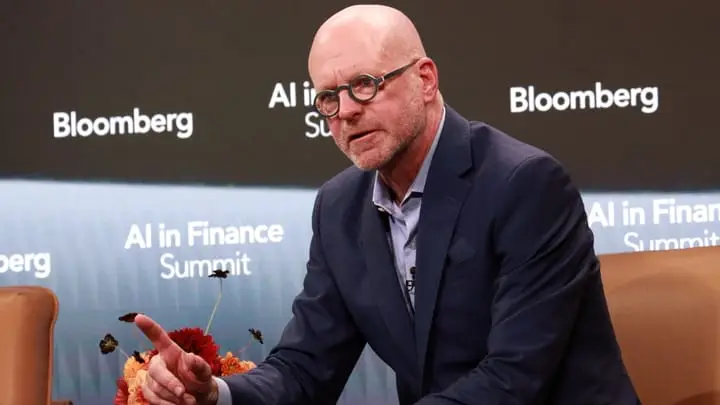
Steve Randich, CIO of the Financial Industry Regulatory Authority, made his position clear at Bloomberg's AI in Finance Summit in New York: AI should improve the work, not simply shrink the team doing it. That's a more interesting goal than most AI pitches in financial services, and it changes what success looks like for the regulator and for the firms it oversees.
Effectiveness over headcount
Randich's framing centres on what he called effectiveness rather than efficiency. He compared FINRA's approach to a police department that keeps the same number of officers while crime falls. "You keep the same number of police officers to have less crime, and that's what our goal is — not to get an ROI that's just efficiency, but more along the lines of effectiveness," he said.
That distinction matters for anyone budgeting an AI programme. Cutting cost per task is easy to measure and easy to explain to a finance committee. Measuring whether a surveillance team catches more of the right problems is harder, but it's the metric Randich is pointing at.
A decade of AI inside the regulator
FINRA isn't new to this. Randich said the organisation has used AI for roughly 10 years, starting when it migrated to the public cloud. It relies on open source software for machine learning and deep learning work. The first major use case was market surveillance, which he described as an area with a large data problem. "We need very efficient, very smart surveillance systems," he said.
Other uses are newer. The communications function uses AI to inspect advertising videos on member firms' websites for signs of fraud, and to summarise thousands of incoming complaints. Randich was clear that the aim isn't to remove people from the loop. The technology is meant to let staff spend their time on the cases that need judgement.
Building governance before the vendors arrived
When FINRA started, it had to build its own governance for model management and operations. Randich said a mature ecosystem of vendors and consultants didn't exist at the time. That's now changed, and the regulator's focus has shifted to the firms it supervises.
His questions for those firms are practical and sound like a model risk review: "Do they have the right integrity, quality? Are they updated properly? And are the outputs accurate?" For IT and risk teams, that list is a useful checklist even outside a regulatory setting. Data lineage, model refresh cadence and output validation are the points an examiner is likely to press on.
Same rules, possibly new rulebook
Randich's position is that the supervisory framework stays put. "We're going to be agnostic to this technology change in terms of our regulation, just like electronic markets, just like with crypto and other products, asset classes. The supervisory requirements and obligations of firms don't change because of AI," he said.
He was also candid that the rules may need to change in response. FINRA is engaging with firms to understand how they use AI and how it alters their operations. "Maybe our rules and regulations need to change with it," he said. My read is that this is a signal to firms to start documenting AI use now, because the expectation will be a working control set, not a promise to comply later.
Algorithmic trading and new misconduct
The point about rules isn't abstract. Randich said algorithmic trading, which uses automated instructions to run high volumes of trades, now accounts for some 50% of retail or exchange equity and options activity. That shift brought new avenues for bad actors. Surveillance now has to track how manipulators use algorithms across multiple liquidity pools. "We needed to make sure that our surveillances were focusing on how fraudsters and market manipulators were now using algo trading across multiple liquidity pools to commit fraud," he said.
What the trading floor is doing
On the firm side, Chris Churchman, partner and co-chair of the global banking and markets AI working group at Goldman Sachs, described a lot of bottom-up innovation. The firm's approach is to enable experts on the trading floor to build their own tools rather than waiting for a central team to deliver them.
Charlie Flanagan, chief AI officer at Balyasny Asset Management, framed the work as augmented intelligence rather than automation. "We very much still believe the human plus the machine is the right answer. But of course, what the human can do with the machine today is advancing rapidly," he said.
Flanagan said Balyasny had built its own systems internally for years. He pointed to Anthropic's Claude Code agentic coding tool and other resources as the thing that changed the paradigm. "We've had to reimagine the whole thing in the last year because of the new capabilities they've given us," he said.
Automation versus reconception
Churchman sees two mindsets among firms. The first automates existing processes to get answers faster than people can. The second, which he calls reconception, asks what questions become worth answering now that analysis is cheap. "Now that intelligence is abundant and elastic and cheap, what questions can we answer today that we'd never even conceived of answering before, and how do we pull the data together to make those decisions at scale?" he asked.
The next problem, in his view, is scaling the technology. AI tools now sit at different layers of an organisation, and the design question is how to aggregate them into something lasting. "How do you make sure that you build firm-wide tooling that makes the firm smarter over time? You actually build a layer that's actually worth building, that enables the firm to learn faster than it forgets," he said.
That last line is the one to take into a planning meeting. The firms that gain from AI over the next few years will likely be the ones that turn one team's experiment into shared infrastructure, and the regulator is already watching how that infrastructure is governed. For IT leaders in regulated sectors, the practical work is to get model documentation, data quality checks and update processes in place before an examiner asks for them.