Dallas CIO Jeff Stovall on Security Leadership, Budget Defense and AI-Driven Threats
- Kelsey Ziser
- 658 views
Dallas CIO Jeff Stovall explains why he added a CISO and an interim CTO, what a council budget fight taught him, and why AI changes the threat model.
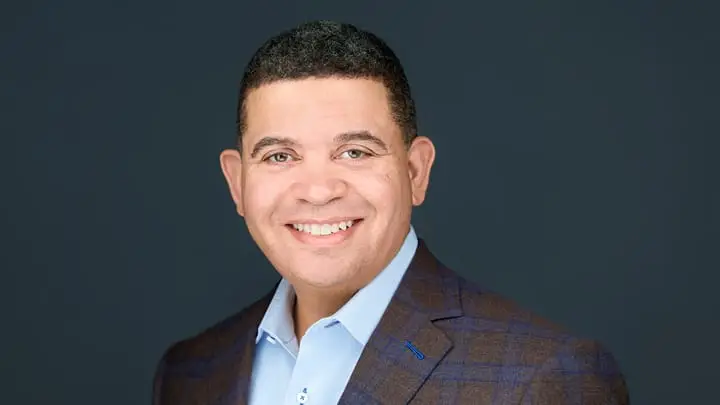
Dallas CIO Jeff Stovall has reshuffled his IT and security leadership, and the reasoning says a lot about where municipal IT is heading. His core argument: the new threats are persistent enough that the security chief shouldn't spend their time running help desk and patching workflows.
Splitting security and operations
Stovall's first big move was bringing in a permanent CISO. His security team had gone more than a year without a strong, stable leader, and he says that gap had worn down the team's confidence and sense of direction. A new CISO arrived in August, and Stovall reports that the change has already brought fresh thinking and a noticeable lift in enthusiasm. The security group has also been reorganized around what it actually produces.
The second move was less obvious. The IT service management group had been reporting to the CISO, a setup Stovall believes a previous CIO created to get tighter alignment on patching. Stovall says that arrangement pulled the CISO into day-to-day service desk work when the job he wanted was threat analysis. So he appointed an interim CTO and moved ITSM under that role.
Stovall's framing is blunt. He needed the CISO "thinking about some of the new threats that we have, versus managing what I would call typical IT operations." He describes those threats as persistent, pervasive and unrelenting. The change also spreads executive load across more people, which matters when one leader is covering the whole stack.
Stovall also mentioned a recent SIEM upgrade. He said it was about 60 days old at the time of the interview, so it's too early to judge results, but it's part of the same push to sharpen detection.
Defending a budget in front of city council
The budget hearing didn't go the way Stovall planned. He had to defend IT's budget before the city council, even though the city had passed its budget in September. A last-minute change to the budget was hard to position against, and he says it forced him to rethink how he talks about IT's value.
His experience in Charlotte, North Carolina, where he spent 10 years as CIO, gave him a base in municipal work. But he's clear that a city is not a template. Each one has its own way of operating, deciding and handling politics. He also draws a sharp line between a city council and a corporate board. Elected municipal leaders face steady outside pressure, while a board at a public company usually isn't exposed to the same kind of pressure. That changes what a good IT briefing looks like. Technical detail matters less than a clear link between spending and what residents experience.
For IT leaders who report into elected bodies, this is the lesson worth carrying. Board-style reporting built around risk and return can miss the mark. You need a version of the story that holds up when the people in the room are answering to constituents.
Where the money goes, and where it doesn't
Stovall says he's putting dedicated investment into cybersecurity and AI. Neither choice should surprise anyone right now. The more pointed part is what he's deliberately not funding: traditional systems administration.
His reasoning is that AI is getting better at the work those roles do, and that makes them less central to keeping IT running across the city. He expects those roles to shift toward outcomes, meaning what systems are supposed to achieve for the organization, rather than managing uptime and concurrency. He goes further, saying traditional systems administration roles will ultimately be automated and won't have people in them. He adds that this doesn't diminish people's value in the organization. It changes how he decides where people can do the most good.
That's a position many infrastructure teams will find uncomfortable. The practical read: if your team's value sits mainly in routine maintenance, that's the work most exposed to automation. The skills that hold their value are the ones tied to architecture, security outcomes and business results.
PHP2Shell and the supply chain problem
The development that's changed Stovall's thinking most is the PHP2Shell vulnerabilities. His understanding is that the flaw had been known for years but was considered too hard to exploit. In his view, AI has changed that calculation. What was theoretical is now a practical concern.
Stovall says his own organization wasn't directly affected by the vulnerability. The impact came through suppliers in its supply chain, and that was enough to change how the city thinks about risk. He expects more vulnerabilities like this, and he thinks they could come from anywhere in the environment. That's pushing him to put more weight on business continuity and resilience, not only on prevention.
He also argues that the industry has been modeling threat actors as human, and that the model needs updating. "We really need to start thinking about threat actors as AI," he says. For teams building playbooks, that suggests faster assumptions about how quickly a known weakness can turn into an active campaign, and less comfort in the idea that obscure flaws are safe because they're hard to weaponize.
Reading widely and checking sources
On information habits, Stovall says he consumes traditional media like everyone else but admits he can't keep up with everything. He was surprised that The Wall Street Journal broke the PHP2Shell story ahead of other outlets. His takeaway is that teams need to work from multiple sources, just as AI systems shouldn't learn from a single input.
He also argues that careful journalism still matters, even when information moves faster than ever. Reporting with integrity that connects dots that aren't obvious is still valuable, he says, as long as it reaches people in a form they can use.
Taken together, Stovall's moves show a CIO trying to separate security from routine operations, reframe budget conversations for an elected audience and plan for a threat model that's changing quickly. Watch whether the SIEM upgrade and the new security leadership produce measurable results in the next budget cycle. That will show whether the reorganization was the right bet.


