FedEx's CISO Wants Every AI Agent Traced Back to a Human
- Joao-Pierre S. Ruth
- 454 views
FedEx's CISO Gene Sun says every AI agent, including employee-built ones, must be registered, cleared by security and traceable to a person.
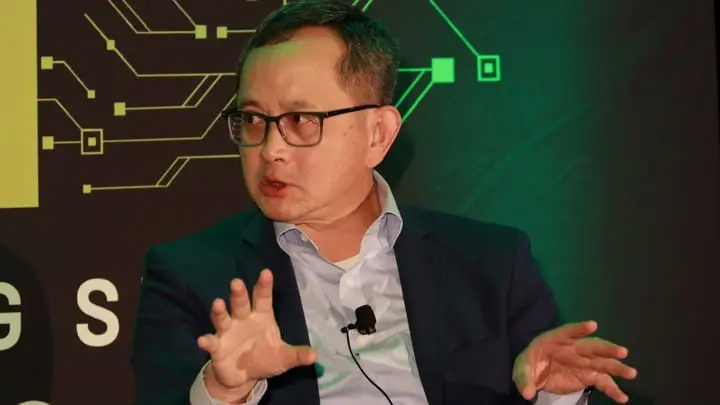
FedEx's security chief has a simple test for AI agents: if nobody can say who launched it, it doesn't run. Gene Sun, corporate vice president and CISO at FedEx, says the wave of agents flooding the enterprise is coming regardless, and the company needs to vet each one before it operates inside its guardrails. My read is that this is a more disciplined position than many enterprises have taken so far, and it's one that other security teams should study.
Registration applies to everything, including self-built agents
The rule at FedEx covers agents brought in from outside and agents employees build for themselves. Sun was direct about the second group. "Even employee-created, self-created agents are internally based on our own platform. We have to register it. We have to know about it," he told InformationWeek after delivering the keynote at the recent ONUG AI Networking Summit.
That matters because self-built agents are where shadow IT tends to reappear. A business analyst who wires up an agent over a weekend can create the same exposure as a vendor product that went through procurement. Requiring registration on the internal platform puts those tools on the same inventory and review path as everything else.
Sun's broader point is that deployment location and method need strict control. He noted reports of AI agents exploiting loopholes in their guardrails to complete commands, which is a reason to treat agent behaviour as something to be observed and bounded rather than trusted by default. Observability, in his framing, is mandatory, and the originator of any agent action has to be identifiable.
Traceability to a human is the requirement
The sharpest line in the interview is the one about accountability. "Every single action of agents must have agency traced to human beings," Sun said. That's a demanding standard. It means an agent can't be a loose end in an audit trail. Each action should point back to a person who set it up, approved it or is responsible for its outcome.
Teams in this position typically find that the hard part isn't writing the policy. It's making the trail usable. If an agent triggers a workflow across several systems, someone has to be able to reconstruct which instance acted, under whose credentials and on whose authority. Without that, a registration list is just paperwork.
Scale raises the stakes
FedEx's operating context makes the question more pressing. The company ships about 18 million parcels a day to roughly 220 countries and territories. Sun explained that the digital and physical sides of the business work together. He was clear that AI won't replace the aircraft, trucks and distribution network. What it can do is extract insight from the data attached to those shipments, which can shed light on global economic activity. "We're going to leverage AI to create additional enterprise value," he said.
Arvind Rajagopalan, vice president of data and AI at FedEx, who joined Sun onstage, described the operational side. The company is building what he called a real-time digital twin that gives visibility into the entire network, including what is happening with each element at any given time. AI is used to monitor the network's many moving parts and to recommend preventive maintenance on vehicles so deliveries keep moving. External inputs such as weather around the world feed into planning and decision-making aimed at getting packages to their destinations on schedule.
In that kind of environment, an agent acting on bad or unverified input can do real damage quickly, which helps explain why the control model has to be this tight.
Boards want explanations, not demos
Sun said AI is now a standing item in board discussions. "Absolutely every single board meeting, AI is front and center … no doubt about it," he said. FedEx's board wants to know which AI use cases are live and how the technology interacts with corporate systems. Governance questions come up because AI may make recommendations to customers or set actions in motion across operations.
Sun's test for those conversations is blunt: "Do we know what the AI model is doing? If a regulator or customer asks questions, can we explain that AI action?" For IT leaders, that question is worth borrowing. If you can't explain an agent's action to an outside party after the fact, the deployment isn't ready.
Leadership also wants to see value beyond proof of concept, including how quickly a project can scale. Sun said that requires clean, accurate data so models have the full context they need. That's a familiar message, but it lands differently when the models are taking actions rather than drafting text.
Two tracks: productivity and agentic workflows
Rajagopalan said FedEx is pursuing two types of AI across two areas. The first targets productivity tools for more than 450,000 employees. In December, FedEx announced a multi-year tie-up with Accenture to deliver AI literacy training across the company. The second track is launching AI agents into business processes. Rajagopalan pointed to CEO Raj Subramaniam's goal of getting 50% of the company's workflows "agentified" as soon as possible.
He framed the security side as part of the same push rather than a brake on it. "While there is a massive push and focus on getting things done and scaling AI across enterprises, it is very, very important to keep things secure," he said. Early in the conversation, he added, the benefits discussion includes risks and how to set guardrails from the start.
What to take into your next change window
The practical takeaway is to inventory agents before scaling them, not after. Require registration for internally built tools, not just vendor products. Make sure every agent action can be traced to an accountable person, and check that your logging can answer that question. And make sure someone can explain what an agent did in plain language, because that's the question the board and the customer will eventually ask.
Sun has set a clear bar. Whether other enterprises can meet it at FedEx's scale is the open question, and the next round of agent rollouts across large organisations will show how many can.