Telecom Transaction Data Could Unlock Receivables Financing for Connectivity Suppliers
- Natalie Stipan
- 458 views
Telecom billing and service records could support receivables financing, shifting funding decisions from supplier balance sheets to verifiable debtor obligations. Here's what IT and infrastructure teams should weigh.
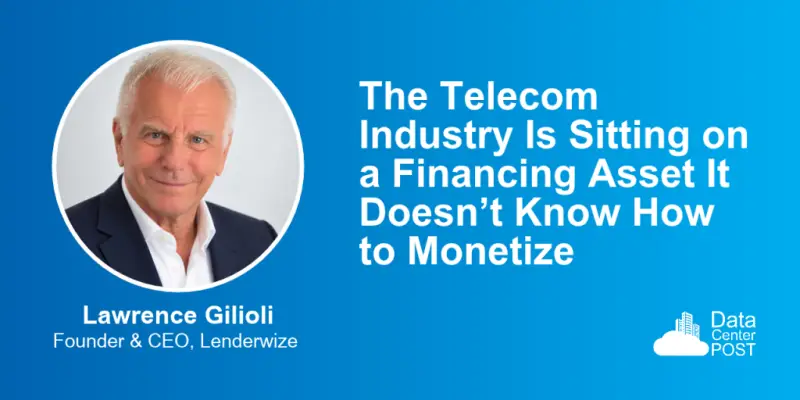
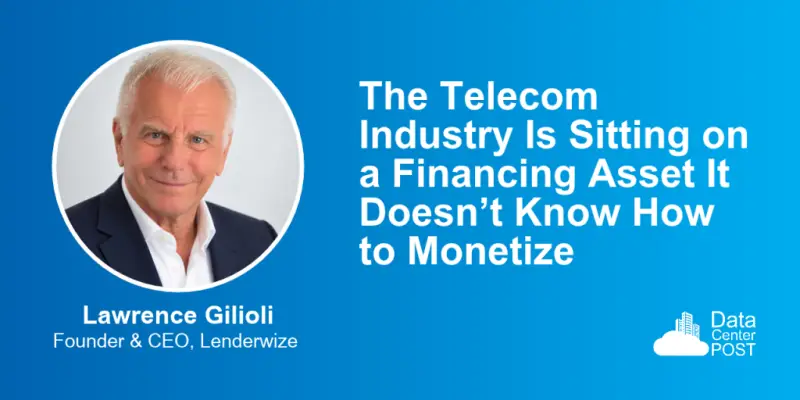
Telecom carriers already produce an enormous amount of structured evidence about who delivered what, at what rate, and whether the bill matched the traffic. Most of that evidence gets used for billing and reconciliation and then sits idle. The argument coming from Lenderwize founder and CEO Lawrence Gilioli is that the same records could help finance the receivables behind connectivity services, and that the financing decision should lean more on the debtor's credit than on the supplier's balance sheet. For anyone running infrastructure, billing operations or supplier relationships, that's a shift worth understanding before it shows up in a commercial negotiation.
The Data Is Already There
Take a wholesale connectivity provider supplying an international telecom operator. The commercial relationship throws off service records, traffic measurements, contracted rates, billing data, invoices, reconciliation results and payment histories. Operations teams use these to confirm what was delivered and what was billed, and to spot discrepancies.
Gilioli's point is that the same material can also serve as evidence that a receivable exists, carries value and is performing. That matters because a lender backing a conventional corporate borrower mainly asks whether the company can repay in general. A financier buying a receivable has narrower questions: does this specific payment obligation exist, is it enforceable, is the debtor creditworthy, and can the cash actually be collected?
Good transaction records can answer part of that. They can't remove credit risk, but they can reduce some of the uncertainty about whether the debt is real and what it's worth.
Why Supplier Size Shouldn't Set the Price Alone
Consider two connectivity providers delivering comparable services to the same investment-grade operator. One is a large corporation with deep banking relationships. The other is a smaller supplier with limited access to working-capital facilities. Both may hold receivables against that same customer, yet their financing costs and liquidity options can diverge sharply.
Some of that gap reflects real differences in financial strength. Gilioli's question is how much of it should remain once the payment obligation is owed by the same creditworthy debtor and the receivable can be independently verified. He isn't claiming receivables finance is new. What has changed is the technology that makes verification and monitoring practical at scale.
What a Financeable Receivable Actually Requires
Turning transaction data into something institutional investors will fund takes more than a dashboard. It needs a chain of evidence and enforceable rights, which in his framing includes:
- Transaction evidence supporting the delivery and commercial value of the service.
- Receivable validation confirming the amount is owed, subject to contract terms and any disputes.
- Credit assessment of the debtor's capacity and willingness to pay.
- Legal enforceability, including appropriate contractual rights and, where needed, assignment or acknowledgment arrangements.
- Payment control ensuring collections follow the agreed settlement terms.
- Continuous monitoring of payments, exceptions, disputes and outstanding exposure.
The value comes from combining these, not from any one of them. A verified invoice with no collection controls still carries real risk. A controlled payment account without solid transaction evidence offers limited protection. And even excellent records can't make up for an insolvent debtor. Here's the thing: the financing case only holds when the pieces are integrated into one process.
Why Data Centre and Infrastructure Teams Should Pay Attention
Digital infrastructure runs on a web of telecom operators, connectivity providers, cloud platforms, equipment vendors and specialist service firms. They don't share the same financial profile. A major operator may have plenty of access to institutional capital, while smaller suppliers in the chain can face tighter liquidity. As those commercial relationships grow more intricate, the financial plumbing has to keep pace.
That said, not every contract fits. Long-term construction commitments, contingent obligations and disputed payments carry very different risk from established, undisputed trade receivables. Financing is most likely to get more efficient where obligations are clear and verifiable, and that's a narrower slice than the headline suggests.
Who Controls the Gateway
If transaction data becomes the route into financing, the next question is who holds that route. Banks supplying capital, infrastructure operators generating the data, technology platforms running commercial transactions, and independent financial infrastructure providers could all make a claim. My read is that whoever sits closest to the verified transaction stream will have the strongest position.
Platforms that pair verified transaction information with financing and payment services could add revenue without lending from their own balance sheets. Infrastructure businesses could gain better working-capital access. Lenders could get assets with stronger verification and monitoring. Customers could use financial services embedded in platforms they already rely on.
Those gains aren't automatic, though. Data access, confidentiality, interoperability, regulatory obligations and contract enforceability all need work before any of it functions at scale.
Faster Payment Is Only Part of It
Gilioli's broader proposition goes beyond speeding up payments. Operational systems that run digital infrastructure could also support a more transparent financial ecosystem, because the telecom industry already holds detailed records of the commercial activity moving across its networks. The next phase of infrastructure may create value in two ways: by carrying data, and by financing the commercial activity that data describes.
For operators and suppliers, the practical next step is to check how well their billing, reconciliation and payment records are structured and how easily they could be verified by a third party. That readiness will determine whether this model becomes a real option or stays a whiteboard idea.


