PowerMaxOS 10.5 Brings PowerPath Back and Adds Snapshot Scanning to PowerMax
- Harold Fritts
- 661 views
Dell's PowerMaxOS 10.5 restores PowerPath, claims up to 29% higher IOPS, and adds Cyber Detect scans of snapshots at no extra charge with a service contract.
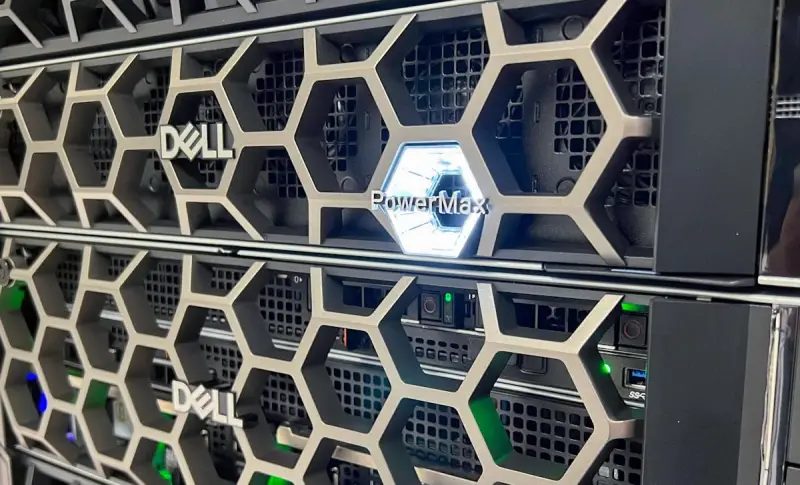
Dell's PowerMaxOS 10.5 is worth a close look before your next change window, mainly because it reopens a question many PowerMax shops had quietly closed: whether PowerPath belongs in the stack again. The update brings PowerPath multipathing back to the platform, extends Dell Cyber Detect to PowerMax snapshots, and opens array telemetry through native OpenTelemetry and faster bulk REST APIs. It targets the PowerMax 2500 and 8500, installs non-disruptively, and carries no extra charge for customers with an active Dell service contract. It's available now, with a Model Context Protocol (MCP) integration planned for later this year.
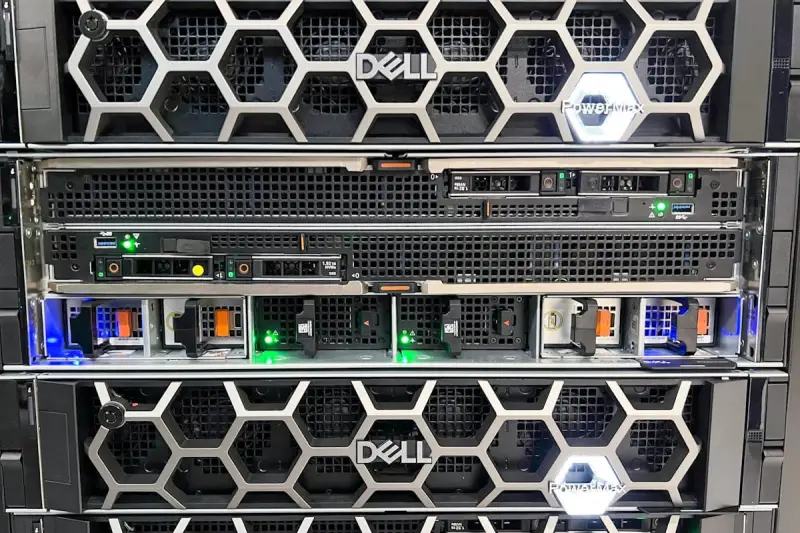
Dell's headline number is up to 29 percent higher IOPS from cache-aware PowerPath compared with native round-robin multipathing on a PowerMax 8500. That's a vendor figure from internal testing, and the test conditions matter. More on that below. The release also lands in a particular context. It follows PowerMaxOS 10.4, which focused on SRDF read latency and ransomware detection. Dell frames the software push against constrained NAND supply, a point that fits a broader pattern of vendors getting more life out of installed hardware through code rather than new drives. Dell also says PowerMax sales grew more than 60 percent in fiscal 2026 and cites IDC data putting its share of high-end storage at 42 percent, more than twice that of its nearest competitor. Treat those as Dell's characterisation of market data rather than independent confirmation.
PowerPath is back, and the numbers need context
PowerPath support now covers the PowerMax 2000, 2500, 8000, and 8500. That's a slightly odd list for a release aimed at the 2500 and 8500, since the two earlier arrays pick up the multipathing software too. If you run a mixed estate, that's useful: you can standardise host multipathing across generations rather than maintaining two approaches.
The mechanism is what makes the 29 percent figure plausible. Native round-robin MPIO sends reads down each path in turn, whether or not the requested data sits in cache on the node at the far end of that path. PowerPath tracks which PowerMax node already holds the data and sends the read there. When most reads are cache hits, skipping a cross-node hop is where the gain comes from. Dell's test was an 8K random read hit workload on a PowerMax 8500, so the 29 percent describes cache-served reads under those conditions. Production workloads with lower hit rates, larger I/O sizes, or write-heavy patterns will see different results, and nobody should size a migration on the headline number alone.
Before you plan any host-side change, confirm your multipathing policies, your host OS support matrix, and the PowerPath version your hosts need. The source doesn't cover those details, so check Dell's documentation for your specific configuration rather than assuming a drop-in swap.
Telemetry and automation
The telemetry changes are the part most likely to affect day-to-day operations. Native OpenTelemetry support streams performance data to Prometheus or any OpenTelemetry-compatible collector, so teams that already run that tooling can drop custom polling scripts. Dell's enhanced bulk REST APIs are the other headline here. Dell says they return performance metrics up to 14 times faster through a single filter-driven request. That comparison pits one bulk call covering 10 instances on PowerMaxOS 10.5 against 14 standard API calls on PowerMaxOS 10.4. It's a targeted comparison, so expect smaller gains if your polling pattern differs.
Fabric events are a useful addition. Fabric Performance Impact Notification (FPIN) events from Broadcom Brocade SAN fabrics now show up in the REST API alongside storage performance data. If you've ever had to correlate a latency spike on the array with a congestion event in the fabric across two consoles, having both in one source simplifies that investigation.
The MCP integration, planned for later this year, lets IT managers ask about capacity, performance, or response times in plain language from AI clients such as ChatGPT, Claude, or Gemini. Dell says storage administrators keep full control over configuration changes, which suggests the intended use is reporting and questions while changes stay with the storage team. Dell's developer site already lists MCP tools across its storage lines, so this fits a wider push. Whether your change control process will accept AI-driven queries against production arrays is a question for your security team, and it's worth settling before the feature arrives.
Red Hat OpenShift operations also get streamlined provisioning and faster cleanup for containerised workloads. Dell hasn't published figures for those gains, so treat them as qualitative until you test them yourself.
Cyber Detect now checks PowerMax snapshots
PowerMax already takes immutable snapshots that can't be altered or deleted. What's new is that Dell Cyber Detect can now check whether those snapshots are clean. Cyber Detect is Dell's integration of Index Engines CyberSense, which reached PowerStore first. It runs byte-level analysis trained on more than 7,500 ransomware variants. Dell cites up to 99.99 percent confidence in detecting corruption, drawn from an ESG report that Index Engines commissioned in June 2025. That's a vendor-commissioned study, so read the number as a claim to verify against the report's methodology rather than a guarantee.
The operational value lies in timing. Array-based snapshot scans can run several times a day, which helps teams spot an attack in progress and pin down when data first became at risk. Policy-driven or on-demand scans identify the last clean copy, which is the question that matters most during recovery. Forensic output lists affected servers, corrupted files, the attack timeline, and the blast radius. Findings can flow into SIEM and SOAR platforms such as Splunk, QRadar, and Microsoft Sentinel. Drew Schulke, vice president of product management for primary storage at Dell, put the core issue plainly: after an attack, the urgent question is whether a team "can trust that copy."
Cost is the catch. Cyber Detect requires a separate license and a supported Dell PowerEdge server, so it sits outside the no-charge PowerMaxOS upgrade. Budget for it as its own line item, and confirm that your server hardware meets the requirement before you plan a rollout.
NVMe over TCP gets easier to manage
End-to-end NVMe over TCP gains external Unisphere and Solutions Enabler management, simplified provisioning, and support for 100GbE single-mode optics. Dell says these additions let administrators run a PowerMax entirely over standard IP networks. That matters for shops that want NVMe-oF without building a separate Fibre Channel fabric. NVMe/TCP has been part of the platform since PowerMaxOS 10 arrived with the 2500 and 8500, and Dell describes the past year of PowerMax releases as a steady push on security, ease of use, hypervisor flexibility, and maturing that protocol.
At a glance
| Feature | PowerMaxOS 10.5 |
|---|---|
| Platforms | Dell PowerMax 2500 and 8500 |
| Upgrade | Non-disruptive; no additional charge with an active Dell service contract |
| Bulk REST APIs | Up to 14x faster access to performance metrics (Dell figure): one bulk call for 10 instances vs. 14 standard calls in PowerMaxOS 10.4 |
| Telemetry | Native OpenTelemetry streaming to Prometheus or any compatible collector; FPIN events from Broadcom Brocade SAN fabrics through the REST API |
| PowerPath | PowerMax 2000, 2500, 8000, and 8500; up to 29% higher IOPS than round-robin MPIO (Dell internal test, PowerMax 8500, 8K random read hit) |
| NVMe over TCP | External Unisphere and Solutions Enabler management; simplified provisioning; 100GbE single-mode optics |
| Dell Cyber Detect | Index Engines CyberSense; findings to Splunk, QRadar, and Microsoft Sentinel; separate license and supported Dell PowerEdge server required |
| MCP integration | Planned for later this year |
| Availability | Available now |
What to check before scheduling the upgrade
My read is that PowerMaxOS 10.5 is most valuable to shops that already run OpenTelemetry or Prometheus, have cache-heavy read workloads, and want snapshot integrity checks without buying a separate backup verification product. If you're on a 2500 or 8500 with an active service contract, the upgrade itself costs nothing extra, which makes the evaluation mostly about testing. Run the PowerPath change on a non-production host first, measure your own hit rates and latency, and compare them with Dell's test conditions. Then decide whether Cyber Detect's separate license and PowerEdge requirement fit your recovery plan.
The bigger signal is where Dell is spending its engineering effort. Multipathing, telemetry, and snapshot verification are all software features that extend the life of installed arrays, and the MCP integration points toward AI-assisted operations that still keep change control with humans. Watch for the MCP release timing and for independent performance testing of PowerPath against your own workloads. Those will tell you more than the headline figures.


