AI Bias Starts With the People Feeding It, and CIOs Can't Patch It With a New Model
- John Edwards
- 967 views
AI inherits its operators' blind spots, so CIOs need named owners, human checkpoints and continuous audits rather than a one-time bias fix.
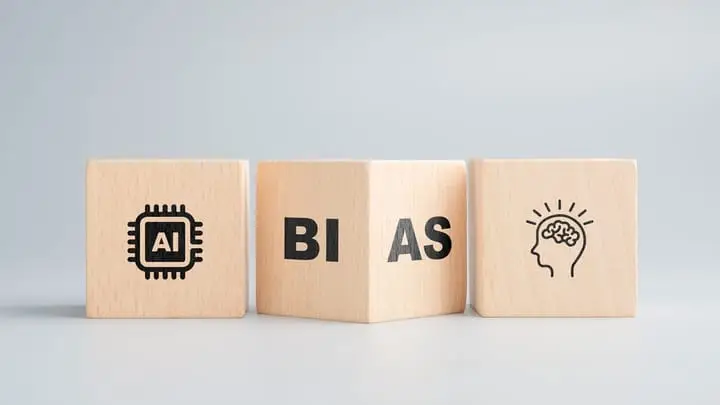
AI is supposed to be neutral, but the people building it, prompting it and feeding it documents are not. Bias rarely needs a bad actor. It gets in through ordinary habits, unstated assumptions and the way a team summarises a meeting in a chat thread. That makes it a leadership problem as much as a model-selection question, and it lands squarely on CIOs and the rest of the C-suite tech leadership.
Bias arrives through the written record
Ran Aroussi, CTO at AI transformation firm VarOps, puts the mechanism plainly. "An AI system reasons over what got written down, and what gets written down isn't usually neutral," he said. Direction from senior leadership can go muted, get misremembered or get misread as it passes through notes and chat groups. The model never sees the original intent. "The system inherits all of that and then answers with confidence, as if it were looking at the whole company," Aroussi said.
That confidence is the real hazard. A fluent answer built on a distorted record looks authoritative, and busy teams tend to accept it without a second look.
Models mirror the culture that trained them
Fábio Caversan, CTO at AI and IT consulting firm Stefanini Group, makes the broader case. Large language models and AI systems learn from historical human data, human-designed objectives and human-defined processes. "They fundamentally act as a mirror to human culture, capturing our institutional assumptions, implicit preferences and historic blind spots," he said.
Justin Kappers, CIO at network security firm Infoblox, makes a similar point from the operations side. Because an AI system learns from human decisions, it inherits human blind spots. "That can't be fixed with a one-time bias audit," he said.
What detection and oversight look like in practice
Caversan says catching bias takes end-to-end telemetry paired with continuous behavioural auditing. "The strongest strategy combines technical testing with operational monitoring and human review," he said. He also recommends evaluating AI systems before deployment and continuing to evaluate them afterward, since data, users, prompts and business conditions keep changing. A system that passed its launch checks can drift.
Infoblox takes a tiered approach. Every consequential AI-assisted decision has a named business owner, and oversight scales with the autonomy the system has. A tool that summarises documents needs only a light review. An AI agent that influences decisions, such as processing a financial transaction, requires human approval, Kappers said. He flagged the part most teams miss: busy people trust a confident answer, so human judgment has to be built into the workflow itself. "We need to guard against such bias by building human judgment in the process," he said.
Nate McCarthy, CIO and chief digital information officer at ECG Management Consultants, starts with governance and controls. He wants teams to examine how AI is perceived inside the organisation before they decide what to build. "You're building AI and the solutions you have embedded in the AI with a way to mitigate bias risk and intervene when it trends in the wrong direction," he said. McCarthy sees that as a way to reduce bias in both the culture and the workforce, human and non-human alike. "You can then hammer everything home with learning, development, simulation and governance checks with your AI and IT teams."
Education beats model-hopping
Caversan returns often to training, and his argument is pointed. Organisations should make sure staff know how to get more out of the AI they already have, rather than chasing the next model release. Better prompting, clearer task definitions and stronger verification often produce more value than a model swap, he said.
When engineers and business users learn to write highly specific prompts, set clear guardrails and stress-test mid-tier models, they get better at spotting subtle shifts in output. That skill, more than any single tool, is what catches bias early.
Where CIOs go wrong
The biggest mistake, Caversan argues, is treating AI bias as a one-time model problem instead of an ongoing systems and governance issue. "CIOs can't treat AI bias only as a software engineering problem that can be solved by buying a better model or installing a turnkey tool," he said.
It's tempting to assume that swapping models or adding static filters will cover a gap in human governance. Caversan warns that it likely won't. Adding complexity without training staff to exercise continuous judgment, or without holding human operators accountable, will speed up inefficiency and hide the underlying risk. The root cause, in his view, is human context, data quality and operational design.
Start with controls you can run now
Caversan's conclusion is practical. "Organizations shouldn't wait for a perfect governance framework or a perfect AI harness before acting," he said. "They should establish practical controls now." That means tracking machine identities, applying least-privilege principles, segmenting systems, tracing decisions end to end, keeping human checkpoints in place, testing continuously and building reliable shutdown mechanisms.
My read: the teams that get ahead of this will be the ones that stop asking which model is least biased and start asking who owns each decision the model touches, and what happens when its answer is wrong. That's a change-window conversation for every IT leadership team, and it's one that a new model won't settle for you.