Navy CTO Treats Pilots Like a Garden to Tame Ship-Based Tech Debt
- Joao-Pierre S. Ruth
- 455 views
Justin Fanelli runs Navy tech pilots in parallel with live systems and prunes sprawl with agent-assisted carve-outs. Here's what IT leaders can take from it.
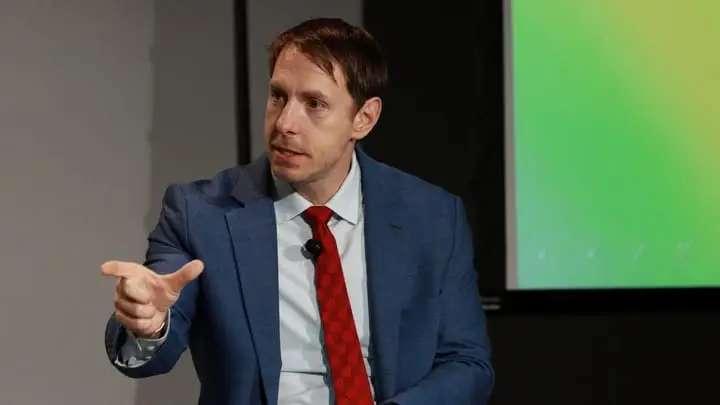
Most tech debt playbooks assume you can update everything at once. The Navy can't, and its CTO has built his approach around that constraint. Justin Fanelli, who has led technology for the Department of the Navy since 2023, is running a modernization effort that has to keep operations going for roughly 850,000 sailors, Marines and civilians. Count the contractors and the figure reaches about 1.5 million, according to Forrester research director Lauren Nelson, who interviewed him on stage at Forrester's Technology & Innovation Forum East.
Pilots run alongside live systems
The core of Fanelli's method is running two streams at once. Current systems stay in production while a pipeline of technology pilots develops beside them. The pilots are not a side project. They are the mechanism for change, and the production estate is what keeps the lights on while they mature.
He also uses user experience surveys to decide when a tool has become slow or ineffective enough to replace. That gives the team a signal that doesn't depend only on the people who maintain the software.
Fanelli's metaphor for managing those pilots is a garden. Some pilots need time to show value, so they're allowed to grow in the background. When one has developed into something worth implementing, the team harvests it. "If something sprouts up and that carrot is ready, then we're taking that carrot and moving with it," he said in a separate interview with InformationWeek.
The shift in mindset didn't come easily. "We've had to shift from [being like] construction workers to gardeners," he said. For a team used to building and delivering on fixed schedules, that's a real change in how success gets measured. You stop counting finished milestones and start judging which experiments deserve more water.
What the numbers show
In 2025, the Navy won Forrester's Technology Strategy Impact Award for North America for what the award citation called "scalable innovation at speed" in its transformation. According to a Forrester blog post, the work freed up hundreds of millions of dollars in budget as the department dealt with its tech debt and reinvested in modernization.
The Navy's reported results include a few specific changes. Acquisition cycles that once ran 12 to 18 months now take several weeks. A generative AI assistant introduced during the program is credited with a 20% to 30% productivity boost. The department also reached zero trust compliance for Flank Speed, its secure cloud environment, three years ahead of schedule.
Those figures are the Navy's own account, and they haven't been independently verified here. What matters for other IT teams is the pattern behind them: shorter procurement loops, an AI tool that reaches working staff quickly, and a security milestone reached ahead of plan.
Why ships make tech debt harder
Fanelli's operating environment adds problems most enterprises don't face. The Navy's fleet moves across the world's oceans, so updates don't roll out in one window. At one point, he said, roughly 30 different versions of software were running across the Navy's ships, because the vessels aren't always reachable for updates at the same time.
That kind of version drift is the tech debt problem in its most literal form. Any team managing distributed endpoints with intermittent connectivity, whether that's ships, remote sites or field devices, will recognize the pattern. Patch cadence stops being a single number and becomes a matrix of fleets, builds and connection windows.
He also pointed to sprawl. Popular tools attract users, users add more software, and an application catalogue that starts at 100 can grow into the thousands. Fanelli's view is that when performance is already dragging under that load, simply trying to go faster may not be viable. "We're running against Usain Bolt, and he has a lead. Even if you sprint as hard as you can, you're going to fall farther behind," he said.
Pruning with agents
His answer to sprawl is structured divestment, or carve-out: deliberately retiring software that can be deprecated. He said agents can help with that work, which is a more interesting use of automation than the usual productivity pitch. Finding what's safe to remove across a large estate is tedious, and it's exactly the kind of job that tends to get deferred.
He was also clear that transformation doesn't mean replacing everything. A large organisation doesn't need a 100% overhaul of every system, but it does need its people to get the tools that support adoption and growth. That's a useful reminder for teams planning a migration: the goal is a working set of tools that people actually use, not a clean-sheet platform.
Fanelli summed up the balance in one line: "We want smart speed. We want scalable speed. We want so much speed that you can go slower sometimes." The last clause is the interesting part. In his framing, speed means the right changes landing in the right order, and sometimes that means slowing a rollout to protect the mission.
What to take from it
My read is that the Navy's approach is less about the specific tools than about the operating model. Running pilots in parallel, judging them by evidence rather than schedule, and pruning software on purpose all translate to a corporate IT estate, even if your fleet is a branch office network rather than a warship.
If you're planning something similar, start by checking how many versions of each critical application actually run in your environment. Then ask which tools your users would miss and which ones they've quietly stopped using. Those two lists will tell you more about your tech debt than any inventory dashboard. The next step is to see whether a parallel pilot track is feasible for your highest-risk systems, because that's the part of Fanelli's playbook that makes the rest possible.