Coast Guard Engine Room to Data Center Floor: A Veteran's Path at Serverfarm
- Alexis Romero
- 375 views
Serverfarm's Neal Bryant went from Coast Guard engine rooms to a field engineering role. His veterans group now has about 40 members and is the company's first employee resource group.
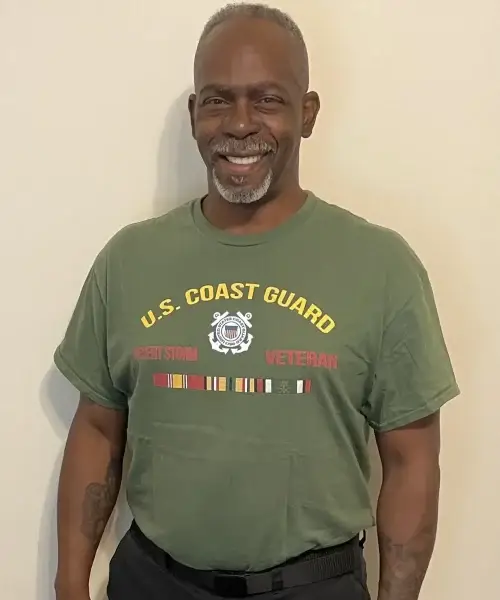
Veterans Day 2026 is a useful moment to look at what veterans bring to data center operations, and Serverfarm's Neal Bryant is a good case study. He's a Senior Field Engineer responsible for quality assurance across mechanical, electrical, power, fire and plumbing systems at data centers across North America. He also started the company's veterans group, which has grown to about 40 members.
Sea duty before the server hall
Bryant served in the U.S. Coast Guard from 1986 to 1996 as a main propulsion electrician. By his own description, that mostly meant living "pretty much in the engine room." He spent years on back-to-back sea duty, and the longest stretch without touching dry land was 76 days. Showers were limited to three minutes, and a hotel room became a reward after a long run at sea.
The work was hard and sometimes dangerous. In 1989, at 19, he helped clean up the Exxon Valdez oil spill. He transited the Strait of Juan de Fuca roughly ten times. He ran a P-250 fire pump off the coast of Catalina on a night a family's sailboat was taking on water, getting the people onto life rings and off the vessel before it sank. He also remembers an engine room fire hundreds of miles from help, when he first put on a breathing apparatus and charged a foam fire station. His crew put the fire out.
The lesson he took from those years is the one that now guides his work: nobody gets through alone. "The Coast Guard has to save themselves," he says, and that idea of self-reliance inside a team runs through everything he describes.
From the sea to the server hall
When Bryant left the service, he got one week of transition training that covered resume writing and how to present himself. After that, as he puts it, "you're on your own." Many people who leave the military know that shock well. Structure disappears overnight, and suddenly you're handling your own paperwork and your own schedule.
He built a path through trade school and construction law, earned a California high-voltage contractor's license, and started his own electrical company as the cellular industry was expanding. Next came 13 years as a stationary engineer in San Francisco high-rises, then 14 years in data centers. Those roles included chief engineer at SAP Labs in Palo Alto, regional facility manager for vXchnge across the West Coast, and work on Georgia Tech's first Beehive rear-door cooling system. He also helped launch the first microgrid with Data Bank in downtown Atlanta and helped stand up an AI data center from bare ground at Microsoft.
Bryant joined Serverfarm in June 2025. He travels constantly, with regular trips to Los Angeles, Chicago and Virginia. He leads site audits across North America, works between construction and operations teams, and closes gaps in procedures. His first step at every new site is simple: "Make friends with them."
Why the skills transfer, in his view
Bryant's explanation for why veterans suit this industry is practical rather than sentimental. Most people in data center work want to do a good job, he says, but service members usually bring a few extra traits. They have a mission-critical drive and a commitment to deliver on time. They're comfortable with process and procedure, and they don't mind asking for help. "We believe in camaraderie," he says.
He also points to judgment. The military teaches when to make a call alone and when to bring others into the huddle before a decision with a large blast radius. In a data center, where one error can ripple across a multi-site portfolio, that habit carries real weight.
The technical overlap is significant too. Military experience in power generation, electrical and mechanical systems, HVAC, communications, IT, safety compliance and preventive maintenance can map fairly directly onto critical facilities work. That said, the match doesn't happen on its own. Someone has to translate a service record into a job description that a data center hiring manager will recognize.
The numbers behind the opportunity
Syracuse University's Institute for Veterans and Military Families, analyzing Bureau of Labor Statistics data, put the veteran unemployment rate at 3.5% in September 2026. Post-9/11 veterans were at 4.1%. In June, an estimated 335,000 veterans were unemployed. The youngest group swings the most: veterans aged 18 to 24 reached 17.4% unemployment that month, then dropped to 8.2% in July.
Those figures are IVMF's analysis, not a forecast, and they describe the broader veteran population rather than data center hiring specifically. Still, they point to a gap. Data center leaders have said many veterans leave service without a clear sense of where their skills are most valued, and some end up in roles that underuse them. Closing that gap would mostly take better introductions between the two sides, not new training from scratch.
A veterans group with a 40-person roster
The veterans group started with a conversation. Bryant describes talking with Billy, a senior director of construction and a Marine, who asked why the company didn't have a military group. They took the idea to HR, and it became Serverfarm's first-ever employee resource group. It's also the second military employee resource group Bryant has started during his career.
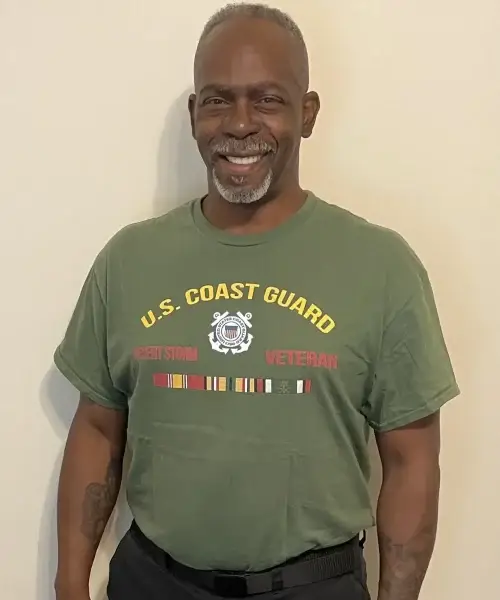
Today the group has about 40 members. Bryant leads the U.S. base and keeps international counterparts on every call, so the group stays global. A recent meeting included a Virginia site manager, Marines, Army and Navy members, and Bryant, the only Coast Guard member in the company. The group works as a collaboration space. Members discuss the benefits veterans already have, the ones they'd like to see, and challenges in other parts of life. This year it also produced its first challenge coins.
What the group gives back
For Bryant, the benefit runs both ways. "We're getting comfort," he says. "Similar people, similarities in our lifestyles, common challenges." After decades of mentoring crews and fixing process gaps, he finds the group is also a place where he gets support, among people who share a mission-first mindset and a similar sense of humor about three-minute showers and sea rations.
He vets each idea through a small committee before opening it to the full group. He says that people who move into the industry straight from the military tend to share a few traits: they're brave, they don't shy away from a challenge, and they're driven by the mission.

His habits reflect the same discipline. He still makes his bed with tight hospital corners so the sheets don't become a trip hazard. He still prefers talking face to face to texting, because in the service you "stand and deliver." And he still holds the view he learned on ships: the ship doesn't sail unless all of us push.
What to take from this
Bryant's story is one person's career, but the pattern is worth noting for anyone hiring or planning a transition. For veterans considering data centers, the training, discipline and habit of looking after the team are directly relevant. For employers, the practical lesson from Serverfarm's experience is to build the relationships first and then create a space where veterans can see they belong. Bryant's group is a small, concrete version of that idea, and whether it grows into a broader pipeline will depend on how many companies follow the same approach.