Liquid Cooling Lease Terms AI Tenants Should Settle Before Signing a Colo Contract
- Natalie Stipan
- 469 views
Before signing a colocation lease for liquid-cooled AI racks, pin down cooling specs, commissioning evidence, maintenance ownership and incident data access.
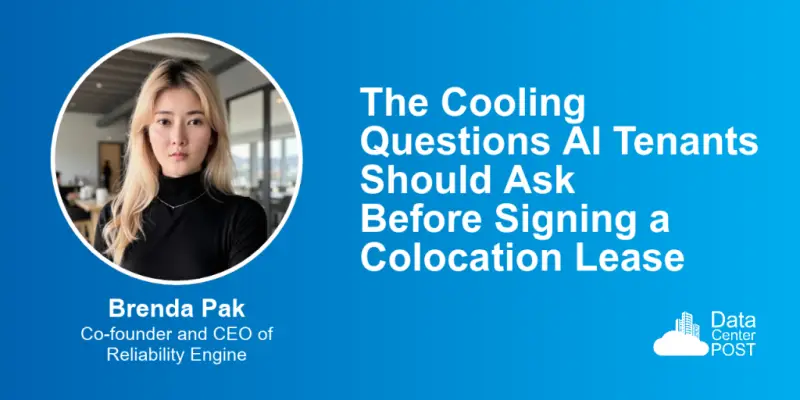
The lease is nearly agreed, the servers are on order, and the site is marketed as AI-ready. Before anyone signs, though, there's one question that deserves a direct answer: what will actually be ready for these racks on move-in day? Brenda Pak, co-founder and CEO of Reliability Engine, argues that tenants should push past the general claim that a building supports liquid cooling and get specific about what gets delivered.
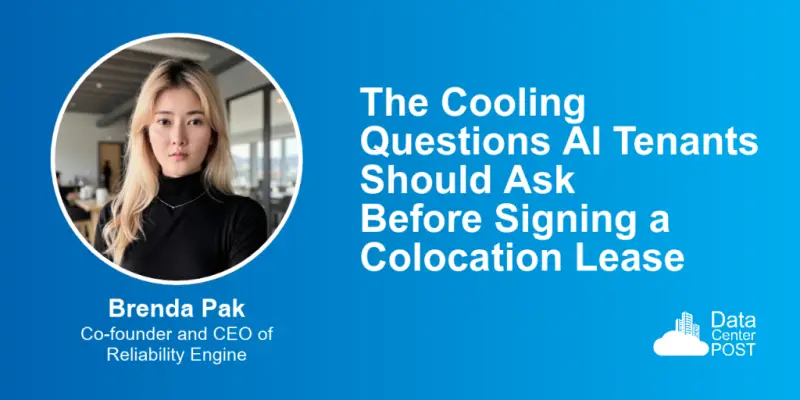
The facility and the proposed hardware have to work together, and both sides need to know where their responsibilities start and stop. A pitch that sounds precise in a sales meeting can turn vague fast when a technician asks who is allowed to connect a hose. Pak's framing is that five questions can settle those details before anyone commits to a date.
What is actually available to our racks on day one?
Ask the operator to describe the deployment you're contracting for, not the building's eventual capacity. Which cooling equipment and connections serve your space at handover? Which elements depend on a later expansion, extra equipment or a future commissioning test? If the answer includes the word "planned," that part of the design isn't yours yet.
Then bring the hardware into the discussion. A rack power figure alone doesn't describe cooling needs. The design team should reconcile the required liquid flow, temperature and pressure conditions, the approved coolant and the connections. It also has to account for the heat the chosen servers still reject to the room, because liquid cooling rarely removes every watt of it.
You don't need to do the engineering yourself. You do need a written record of who checked compatibility and what's still open. Otherwise, two competent teams can arrive at handover holding different assumptions about the same installation, and nobody notices until something doesn't fit.
What evidence will we receive before connecting production hardware?
Request a handover package tied to the equipment and operating arrangement you're actually receiving. It should list the tests completed, the conditions used and any limitations or open items. A successful test in another part of the building can be informative, but it doesn't prove readiness at your connection point.
Agree in advance how the teams will demonstrate normal operation, plus the maintenance and failure conditions that matter. What happens while a pump is unavailable? Who observes the response, and what result counts as acceptable? Commissioning should follow an agreed, safe plan, not get improvised with production hardware sitting on the floor. The commercial logic is simple: decide which evidence must exist before you accept the service, and who has the authority to accept any work still outstanding.
Who checks the cooling after maintenance?
The initial installation is only the starting configuration. Servers will be swapped, filters serviced and coolant topped up. Some of that work will fall to the operator, some to the tenant and some to a hardware service provider.
Walk through one ordinary job together: a server replacement that requires opening a liquid connection. Who authorizes it? Who confirms the replacement is compatible? Who records the work and checks the affected branch before it returns to service? If those answers aren't written down, you're relying on goodwill, and goodwill has a habit of running out during a night-shift incident.
Put the answers into the operating arrangements. The person who owns the server may not own the cooling equipment, and the person doing the physical work may own neither. A shared maintenance calendar and an agreed return-to-service check stop a routine task from becoming an argument about who was meant to verify the result.
Fluid additions and substitutions deserve the same attention. Approval to buy a container of coolant isn't automatically approval to put its contents into a particular loop.
What will we be able to see during a problem?
An incident is a poor time to discover that useful cooling data are unavailable to you or kept for too short a period. Ask which measurements the operator can share for your equipment, how often they're recorded and how they'll be made available during an investigation.
Depending on the design, the useful evidence may include rack or branch flow, supply and return temperatures, pressure readings, control states and maintenance events. Those readings only tell a story when they carry clear locations and timestamps, so they can be read side by side.
Where a measurement isn't available, agree now how the team would investigate without it. A building-level summary may not explain a problem confined to one rack. On the other hand, you don't necessarily need unrestricted access to the operator's control system to get useful evidence. A secure reporting and escalation path can cover most of what you need. Name the people who will coordinate a joint investigation, so a service desk ticket has somewhere to go when the hardware team needs facilities to act.
What has to be reviewed before the deployment grows?
Ask what must be assessed before the next generation of servers arrives or the contracted density goes up. More electrical capacity doesn't automatically mean the installed liquid path and room cooling can support a different hardware configuration. Power headroom and cooling headroom are separate numbers, and only one of them tends to appear on the brochure.
The agreement should separate capacity available now from capacity that needs an engineering review or further work. It should also spell out the approval process: what the tenant supplies, who assesses it and how any testing affects the schedule. Procurement teams can then build that review into the expansion timeline, before hardware with new cooling requirements shows up at the dock.
Before signing
Ask the operator and your own team to explain the same deployment back to you, in their own words. They should agree on what gets delivered, what evidence proves it and who takes charge when something changes. If the answers differ, that conversation has already earned its place in the schedule, and it's far cheaper to have it now than during commissioning.