India Can Build the AI Engine, But the Full Product Is Harder
- Sayantan Mondal
- 804 views
Engineering talent is no longer India's bottleneck. Capital, IP ownership and global scale are, and AI is raising the stakes for each.
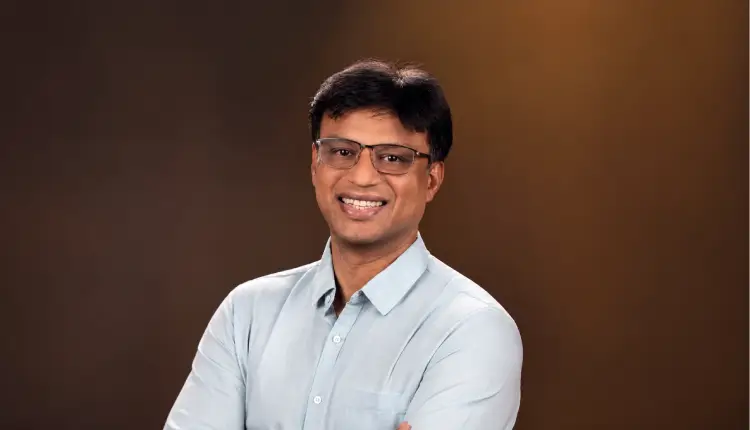
India's engineers have become very good at solving other people's problems. They write software, build products, run complex research and increasingly help develop technology that multinationals treat as strategic. The harder question is who ends up owning the result. How much of that engineering value turns into globally competitive Indian technology businesses? Sandeep Menon, Managing Director and GCC Head of Workato India, thinks the answer is still mostly no, and he's blunt about why.

From cost play to skill play
Menon's view comes from years working across product development, technology services and global capability centres. He has seen India's role change from delivering work cheaply to taking on far more sophisticated assignments. The original labour arbitrage pitch was simple: comparable work, lower price. Menon has never treated cost alone as a durable edge.
What changed was familiarity. Once multinationals started working directly with Indian engineering teams, they found those teams could handle problems well beyond the original brief. Professionals proved they could tackle harder problems and ship faster, and the relationship grew from there.
"I think the GCC play shifted from being a cost play to a productivity play to, now, a skill set at scale," Menon says.
AI is speeding that shift up. When development cycles compress and companies want new capabilities in production quickly, the ability to assemble the right specialised team matters more than adding headcount. But that same shift exposes a limit in how India's tech industry has traditionally captured value. Building sophisticated work for a global client doesn't mean owning the product, the intellectual property or the business that earns money from it.
Menon acknowledges the rise of product-first startups. His problem is scale. In his view, most have not yet reached the size or international reach needed to compete with established global technology firms. "I think we have still not seen that," he says of India producing globally scaled product companies.
Ideas aren't the bottleneck, money is
Menon argues the shortfall isn't a lack of ideas or engineering skill. A global product company needs the capital to fund long R&D cycles, build an international sales presence and outlast rivals with much deeper pockets. Developing a product means spending heavily long before returns become predictable. Entering large markets such as the United States adds more cost, from business development to establishing a credible presence among well-entrenched customers.

He contrasts this with China's manufacturing push, where policy and incentives helped domestic companies expand abroad. Indian product developers, by comparison, often have to fund their global ambitions themselves while competing with incumbents. "If you are an Indian product development company, you are still very much trying to fight global giants on your own," he says.
That economic reality shapes what companies attempt. Without enough capital, the sensible path may be to build a component or develop technology for another company rather than finance a whole product and its international rollout. Teams in this position typically optimise for contracts they can win and fund, and that's a rational choice. It just means fewer companies end up owning the full stack.
Menon's engine analogy captures the progression. "At least now we're saying, 'I build the engine.' Earlier, I was saying, 'I build one nut.'" The next step, in his framing, is building the entire car. Getting there, he suggests, requires an ecosystem where companies can finance extended R&D programmes, operate under tax frameworks that support international expansion and reach overseas markets. He believes policy support will largely decide whether India's product businesses can move from engineering capability to global commercial scale.
AI raises the stakes on jobs and ownership
The urgency is growing because AI is changing both the work technology companies do and the skills they need. Menon expects routine coding, testing and some project management tasks to face heavy automation. That challenges the employment model that let India's technology services sector absorb large numbers of graduates into formal jobs.
At the same time, enterprises need people who can connect AI to existing business systems, design secure architectures and make sure automated processes run within proper governance controls. The demand is shifting away from people who only write code toward people who understand how complex systems work together.
That creates an opening for India to deepen its engineering base. It also raises the same old question in a sharper form: can the country turn that talent into businesses that own and sell the technology they create?
Menon is direct about the social side. "Will the industry still make money? Yes. Will we have a social problem? I think so," he says. His worry is that firms could keep generating substantial value with smaller, more specialised teams while fewer conventional entry-level roles are available. Policymakers will have to find ways to create opportunities for a wider workforce even as the industry asks for more specialised skills.
Product ambition and employment are linked. India needs advanced capabilities, but it also needs an economic environment where those capabilities support businesses, investment and jobs beyond a narrow pool of highly skilled professionals.
What has to happen next
Menon is still optimistic. He points to more young professionals working in product development and a startup ecosystem that keeps getting more capable. Talent won't decide the outcome on its own, though. Companies must be able to finance long development cycles, take products to international markets and compete with firms that already have established customers and deep resources.
GCCs can help. They deepen India's product development experience and expose engineering teams to hard technology problems. But a sophisticated GCC presence doesn't guarantee Indian-owned global products. Those are separate outcomes, and conflating them is the trap.
That gap is the real test for India's technology ambitions. The country has shown its engineers can build increasingly complex technology for global businesses. The harder job is building the commercial and institutional conditions that let more Indian companies own the products, intellectual property and global markets that come out of that expertise.
India can build the engine. Whether it can build the next global technology giant will depend on what happens after the engineering work is done, in the funding, the market access and the ownership decisions that follow.