Charles Schwab’s innovation officer says test AI in controlled space
- Joao-Pierre S. Ruth
- 860 views
Despite the fast evolution of AI in finance, Nikhil Sudan argues that remaining practical with pilots now can help to avoid regulatory fallout down the road. NEW YORK —– Attentive patience is essen...
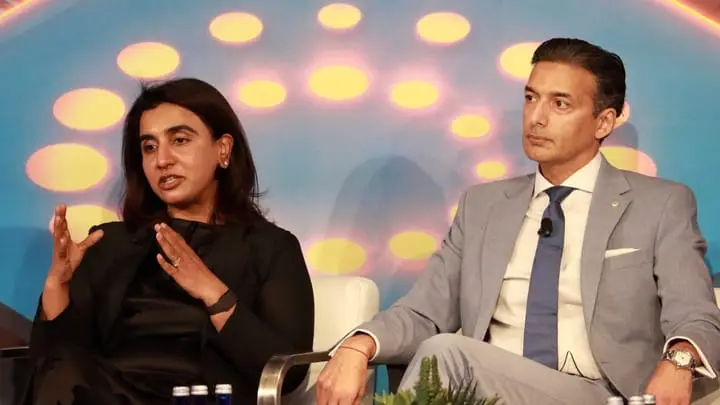
Despite the fast evolution of AI in finance, Nikhil Sudan argues that remaining practical with pilots now can help to avoid regulatory fallout down the road.
NEW YORK —– Attentive patience is essential in determining how the lightspeed development of AI can and cannot be applied in heavily regulated sectors such as finance.
That was part of the strategic mindset shared by Nikhil Sudan, chief strategy and innovation officer at Charles Schwab, with InformationWeek during an interview at last week’s Reuters Momentum AI Finance conference.
Sudan said that the financial services giant pays attention to how AI continues to influence the market, but the company needs to understand its functionality before dabbling with new rollouts.
"We test a lot of things. It's one thing to read about something in the paper. The second thing is to actually get your hands on it and test it out in a controlled environment," he said.
For an institution such as Charles Schwab, he said there is a need to ensure that any new technology introduced maintains the trust given for assets held on behalf of its clients and does not fall afoul of regulatory, governance or legal considerations. In late September, the firm introduced the Charley AI assistant to provide its clients with financial account management support.
InformationWeek Podcast: Is AI-built software a SaaS killer?
"We take all those things into account and say, 'Is there some utility that we can provide to clients in a scalable way?' If the answer is no or not yet, then we just hold on," Sudan said.
AI is not the only emerging technology resource that warrants attention to support Charles Schwab's operations. "We have more than enough things to do on our main products," Sudan said. "We do pay attention and experiment and analyze and then decide when the right time is to offer something."
Sudan also spoke on a keynote panel at the conference on whether to ship or shelve AI pilot products. He was joined by Ampily Vijay, executive vice president and chief digital and technology officer for CBRE Investment Management; Zhen Zhao, chief AI officer at New York Life Insurance; and Colman Madden, director of customer engineering for financial services at Google Cloud, with Alexander Puutio, a professor at Harvard University's division of continuing education, moderating.
During the panel, Zhao said his priority with AI is based on usage and exposure. Even if the pilot starts relatively small, it still must be able to reach as many clients as possible for it to make sense for New York Life Insurance to pursue it further.
"Everything that we try to do in our business is designed for scale, and AI is no different," he said.
That requirement to address tangible needs also applies in the real estate investment management sector, where Vijay said she must consider the nature of the business problem any potential AI product is meant to address.
Forbes CIO Summit spotlights need for 'human in the flow' with AI
"That alignment with business sponsorship is key," she said. "Real alignment to financial value … is really important."
Vijay did allow for leeway with AI during experimental phases to improve features and reliability. However, if a pilot cannot be broken down to relate to business revenue or profits, she said it is hard to sustain organizational support for it.
Being ruthless in determining the ROI from a pilot is necessary, Vijay said. She also wants to see if there is commitment within the organization to improve an underlying process by using an AI pilot.
If the AI pilot is only to be used to reach an outcome and merely automate part of a workflow, Vijay said it is time to stop. "Don't even get on it, don't even bother."
"One of the big shifts from AI was that our team started working more closely with the line of business versus just working with technology," said Google Cloud's Madden.
Putting the operational needs of businesses front and center became essential with his team's efforts, he said. For example, Madden said his team put engineers on trading floors to better understand the workflow of traders from capital market firms and apply those learnings to Google Cloud's AI development efforts.
The week of Nov. 9-13: What happened, what matters, what's next
Making AI practical is also at play at Charles Schwab. Sudan said that the Charley AI is built to meet the customers’ desired type of interaction, allowing for human interaction when requested rather than locking them in with digital-only responses. "In some cases, they want to chat with us [via Charley]. In some cases, they want to use voice," he said.
It is still early days for Charley, and Sudan said they launched with a focus on essential support services for customers, with the potential for additional features to come. "I gradually want to expand that as we get more comfortable with both the quality of the model … and our ability to manage and govern what the AI does," he said.
Joao-Pierre S. Ruth edits stories for InformationWeek as well as reports on C-suite tech leaders across a multitude of industries and tech disciplines. He also hosts the InformationWeek Podcast, which brings together CIOs, CTOs, and other C-suite leadership to discuss their different approaches to addressing shared challenges. He joined InformationWeek in 2019, initially as a Senior Writer covering cloud computing and DevOps. He became a Senior Editor in 2023.
His work with InformationWeek garnered American Society of Business Publication Editors (ASBE) awards in 2024. This included "Could the DOJ's Antitrust Trial vs Google Drive More Innovation?" as part of the team’s Government Coverage, which collectively won a Bronze National award and a gold Northeast regional award, as well as a bronze regional award for a Web Feature Series on the environmental impact of data-driven organizations published during Earth Month. That award included his story "How Do Supercomputers Fit With Strategies for Sustainability?"
He has been a journalist for more than 25 years, reporting on business and technology first in New Jersey, then covering the New York tech startup community, and later as a freelancer for such outlets as TheStreet, Investopedia, and Street Fight.
Joao-Pierre can be reached via email at [email protected]
Cloud outages, cybersecurity, agentic AI & federal policy
Want more InformationWeek stories in your Google search results?
Copyright © 2026 TechTarget, Inc. d/b/a Informa TechTarget. This website is owned and operated by Informa TechTarget, part of a global network that informs, influences and connects the world’s technology buyers and sellers. All copyright resides with them. Informa PLC’s registered office is 5 Howick Place, London SW1P 1WG. Registered in England and Wales. TechTarget, Inc.’s registered office is 275 Grove St. Newton, MA 02466.